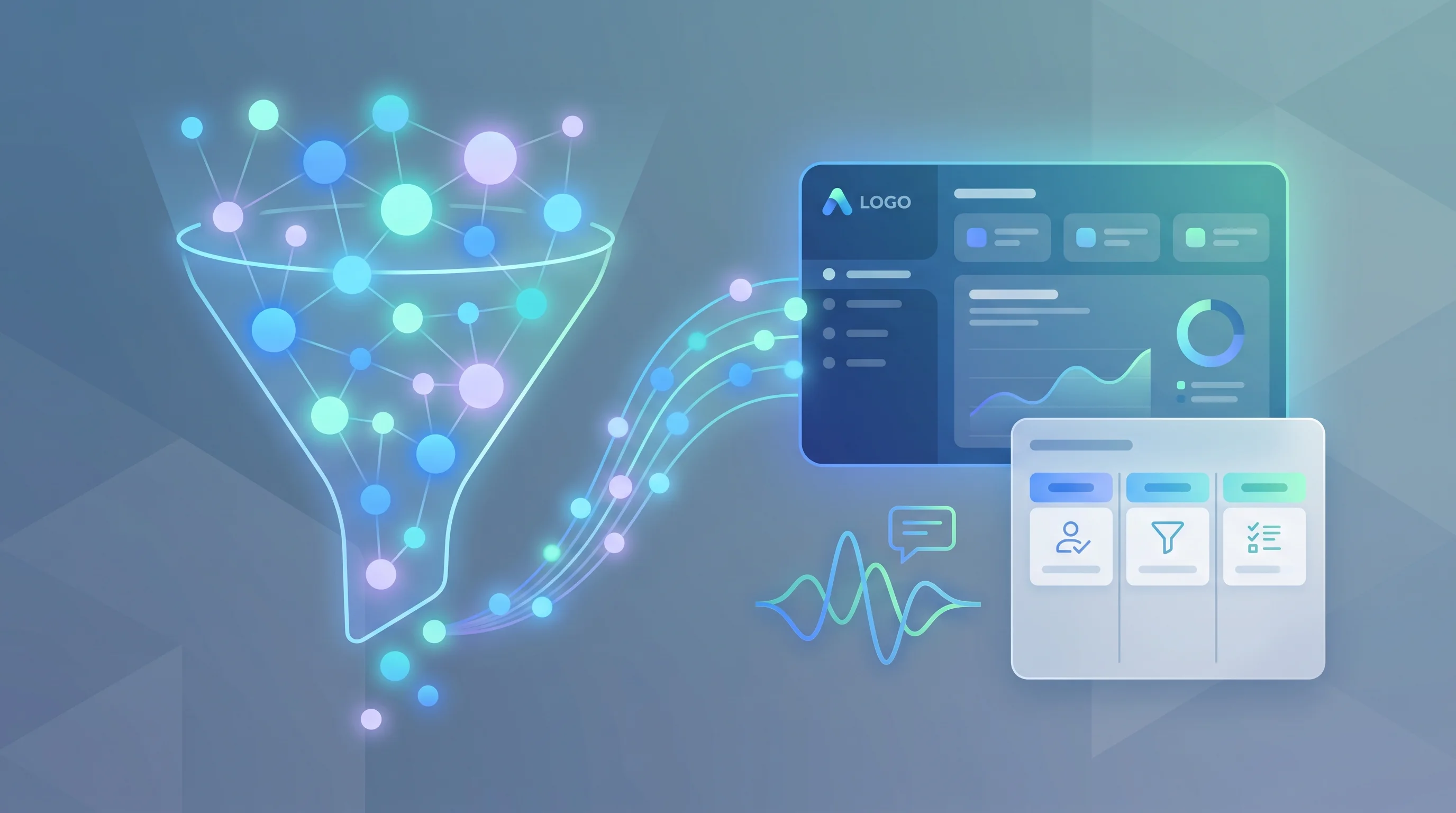

Every GoHighLevel white label guide online sells you the same dream: slap your logo on the platform, set a price, and collect the margin between what you pay and what your clients pay. The setup steps are real, the margin is real, and almost all of that advice is dangerously incomplete.
Here is the part they leave out. The moment your brand replaces HighLevel's on that login screen, you stop being a reseller and become a software vendor. Every bug is now your bug. Every outage is your outage. Every "why can't it do this yet" email is addressed to you, not to a company in Dallas your client has never heard of. White labeling transfers the brand and the accountability - but not the control of the roadmap.
That trade can be excellent or brutal depending on how you set it up. This guide walks the real mechanics, the real costs from the vendor's own pricing page, and the operational reality nobody puts in the sales pitch. If you would rather have the whole thing built and supported so the accountability does not land on an already-busy team, that is exactly what our GoHighLevel automation service is for.
What GoHighLevel white label actually changes
White labeling is a branding layer, not a code layer. You are not getting your own copy of the software. You are rebranding the surface your clients see. That surface has four distinct pieces, and agencies routinely confuse them.
- The custom domain. Instead of clients logging in at app.gohighlevel.com, they log in at app.youragency.com. This is a CNAME record in your DNS and the single most visible piece of white labeling.
- The desktop app branding. Your logo, your company name, your colors, and your support email replace HighLevel's throughout the web interface.
- Branded links. System-generated links in emails and SMS - the ones your contacts actually click - can carry your domain instead of a HighLevel one.
- The mobile app. A fully branded iOS and Android app under your agency's name, published to the App Store and Google Play.
Notice what is not on that list: the database, the servers, the feature set, and the release schedule. Those stay with HighLevel. According to GoHighLevel's own white label CRM page, the pitch is that clients "see your brand, not ours." True. They also do not see who actually runs the infrastructure - which is the whole point, and the whole risk.
What white labeling GoHighLevel actually costs
Here is where most roundups quietly inflate or blur the numbers. These figures come straight from GoHighLevel's official pricing page as of July 2026, and the vendor can change them at any time.
| Plan | Price | What you get for white label |
|---|---|---|
| Unlimited | 297 dollars per month | Custom domain, desktop app branding, unlimited sub-accounts |
| Agency Pro | 497 dollars per month | Everything above plus SaaS Mode: automated billing and sub-account provisioning |
The branded mobile app is not included in either tier. It is a separate add-on billed at 497 dollars per month on top of your plan, or bundled into the Enterprise plan, per the same pricing page. That is the line item that surprises agencies who budgeted for "just the 297."
The part nobody puts in the sales pitch
Say you white label successfully. Forty clients now log in to a platform with your logo on it. Then HighLevel ships a change that breaks a workflow, or the platform has a slow morning, or a client wants a feature that does not exist yet.
Every one of those clients emails you. Not HighLevel. You.
That is the trade you made when you put your brand on the login screen. You captured the brand equity, and you inherited the support surface of a software company you do not control. When the roadmap moves in a direction you dislike, you cannot change it. When there is an outage, you cannot fix it - you can only relay it. Your clients hold you accountable for a product you rebadged but did not build.
This is not a reason to avoid white labeling. It is a reason to staff and systematize it before you flip it on. The agencies that thrive on white label GoHighLevel are the ones that treat support and automation as the actual product, with the branding as a thin layer on top. The ones that struggle treated the branding as the product and got buried in tickets by client fifteen.
White label branding versus owning the system of record
There is a deeper version of this trap, and it applies to you and your clients at the same time.
White labeling changes the logo. It does not change who owns the database. HighLevel still hosts and controls the system of record. That means two things. Your clients cannot easily leave you and take their live pipelines, automations, and message history intact - which is good for retention. But it also means you cannot easily leave HighLevel and take all of that to another platform - which is the same trap, one level up.
We wrote the full version of this argument in our breakdown of the white label CRM system-of-record trap, and it is worth reading before you commit a brand to any platform. The short version: a CSV export of names and emails is not portability. If a vendor cannot tell you in writing how a full account leaves the platform, you are renting your business, not owning it.
The support-load math the guides skip
Let me show the number that actually decides whether white label GoHighLevel works, using example math (illustrative, not a quote).
Suppose you charge each client 197 dollars per month and pay 297 for the Unlimited plan. On paper you break even at two clients and profit on every one after. That is the math every guide shows.
Now add the part they skip. Say each client generates, on average, 30 minutes of support and configuration work per month once you are past the honeymoon period. At forty clients that is 20 hours per month of support labor - half a work week - before you have sold a single new account. Price that labor at even 30 dollars an hour and it is 600 dollars a month of hidden cost that never appears on the HighLevel invoice.
The branding was never the expensive part. The support you now owe as the vendor of record is. This is exactly why we pair GoHighLevel builds with automation that deflects the routine tickets - onboarding flows, self-serve setup, and voice or chat agents that answer the repetitive questions before they reach a human.
How to white label without drowning
If you have read this far and still want to do it - and for the right agency it is a genuinely great business - here is the sequence that keeps it sustainable.
- Start on Unlimited, not Agency Pro. Get the branding and a few clients working manually before you pay for SaaS Mode automation you cannot yet fill.
- Automate onboarding first. The single biggest support drain is client setup. Build it as a repeatable, automated flow before client number ten.
- Turn on SaaS Mode only when billing volume justifies it. The mechanics of that jump are covered in our GoHighLevel SaaS Mode setup guide.
- Decide your support model before you brand. Who answers tickets, how fast, and what is automated versus human. This is the decision that fails agencies, not the DNS record.
- Write down your exit terms. Before you invest in a brand, know exactly how you and your clients could leave. If the answer is "we cannot," price the lock-in risk into the decision.
For agencies that want the platform, the branding, and the automation designed as one system - so the support load does not scale linearly with client count - our white label platform build service handles the whole stack, and our GoHighLevel team runs the automation layer underneath it.
The decision rule
White label GoHighLevel when you have a support and automation system ready to carry the accountability - not the day the branding looks tempting. The logo takes an afternoon. Being the vendor of record is the actual job, and it is a job you should choose on purpose, with the systems already in place to handle it.