
Twilio's own pricing page advertises $0.0083 for every SMS segment sent or received in the US. Run that same text to an AT&T number and Twilio's own page adds another $0.0035 on top, each way, per Twilio's SMS pricing page. Send it to a T-Mobile number instead and the add-on is $0.0045 outbound, $0.0025 inbound. The headline rate was never the real rate. It was the base rate a separate, carrier-specific fee gets added to on every single message.
TL;DR:
- Twilio's $0.0083 SMS rate is before carrier pass-through fees: AT&T adds $0.0035 each way, T-Mobile adds $0.0045 outbound and $0.0025 inbound, per Twilio's own pricing page.
- A2P 10DLC registration adds a one-time brand fee that Twilio's marketing page prices at $44 for a Standard brand, while Twilio's own developer docs itemize the same fee at $46 ($4.50 plus $41.50), per Twilio's A2P 10DLC page and Twilio's brand registration docs.
- A monthly campaign fee of $1.50 to $10 (or $2 for a Sole Proprietor brand) keeps billing every month a campaign is active, whether or not any message goes out.
- Twilio voice costs $0.0140 a minute outbound and $0.0085 to $0.0220 a minute inbound depending on number type, per Twilio's voice pricing page, plus a separate monthly number fee.
The rate that's actually on the invoice
Twilio's SMS pricing page lists one number for the base rate and a separate table of carrier fees underneath it. For long code numbers sending to a US recipient, the breakdown is AT&T at $0.0035 outbound and $0.0035 inbound, and T-Mobile at $0.0045 outbound and $0.0025 inbound, according to Twilio's own pricing page. As an illustration of adding those two sourced numbers together, a single outbound text costs $0.0118 to an AT&T number ($0.0083 plus $0.0035) or $0.0128 to a T-Mobile number ($0.0083 plus $0.0045), not $0.0083.
Every carrier a workflow's recipients sit on has its own line in that same table, and Twilio bills the matching fee per message based on where the number actually routes, not a flat average across all carriers. A workflow that sends to a mixed list of US carriers pays a slightly different per-message fee for every batch, depending on who happens to be on the list that month.
The $44 vs. $46 problem: Twilio's own pages disagree
Before any of those per-message rates apply, a business sending marketing or conversational SMS through Twilio in the US has to register under the A2P 10DLC system, and that registration has its own fee stack that most pricing conversations skip entirely.
Twilio's consumer-facing A2P 10DLC page states the Standard brand registration fee as "$44 one-time brand registration," plus "$15 per campaign for a one-time campaign vetting fee," plus $1.50 to $10 per campaign per month afterward, per Twilio's own A2P 10DLC page. A Low-Volume Standard or Sole Proprietor brand only pays $4 for that same one-time brand step, with the $15 campaign fee and a flat $2 monthly fee layered on top for Sole Proprietor specifically.
Twilio's own developer documentation for brand registration tells a slightly different story for that same Standard brand fee. It breaks the charge into two separate line items: a universal "$4.50" fee "required when registering a new Brand with TCR," plus a "$41.50" Standard Brand vetting charge, per Twilio's brand registration documentation. Add those two together and the Standard brand fee is $46, not $44.
That same developer documentation page lists several more fees that don't appear on the consumer pricing page at all: an $11 brand appeal fee if a Standard Brand vetting gets rejected, a $12.50 Authentication Plus charge for public, for-profit brands, and a $66 to $96 yearly charge for political brand vetting, per the same documentation. None of those show up until a specific registration path hits them.
A fee that bills whether a message goes out or not
Once a brand and campaign are both registered, the monthly campaign fee starts, and it is not tied to message volume. Twilio's own A2P page states this fee runs $1.50 to $10 a month per campaign depending on brand type and use case, or a flat $2 a month for a Sole Proprietor brand, per Twilio's A2P 10DLC page. That charge appears on the invoice in a month with zero messages sent the same way it appears in a month with ten thousand.
Layered on top of the campaign fee is the number rental itself: $1.15 a month for a long code number, or $2.15 a month for a toll-free number, per Twilio's SMS pricing page. Between the campaign fee and the number fee, an idle, fully-registered SMS workflow still costs a few dollars a month before a single text goes out.
Voice runs on a separate rate table
Twilio's voice pricing is structured the same way, as a base rate plus number fee, but the numbers themselves are different from SMS. Outbound calls to US numbers cost $0.0140 a minute. Inbound calls to a local number cost $0.0085 a minute plus the same $1.15 a month number fee, while inbound calls to a toll-free number cost $0.0220 a minute plus a $2.15 a month number fee, per Twilio's voice pricing page.
None of those rates include anything built on top of raw telephony, like a text-to-speech layer or an AI conversation engine. When Twilio sits underneath an AI voice receptionist, the per-minute number above is the telephony floor, not the total. Our voice AI team's own breakdown of voice AI pricing walks through exactly what stacks on top of that Twilio floor once a transcription model, a language model, and a voice model are added for a full AI phone agent.
What a real workflow actually pays
As an illustration, take a workflow sending a steady 2,000 SMS messages a month, split evenly between AT&T and T-Mobile recipients. At 1,000 messages to each carrier, that's 1,000 times $0.0118 for the AT&T half and 1,000 times $0.0128 for the T-Mobile half, for $11.80 plus $12.80, or $24.60 a month in messaging and carrier fees once registration is already in place.
That $24.60 is only the usage line. Getting to the point where that workflow is allowed to send at all costs a separate one-time $44 to $46 Standard brand fee plus a $15 campaign vetting fee, and from then on an additional $1.50 to $10 a month in campaign fees plus $1.15 a month for the number itself, regardless of volume. A quote that only mentions the $0.0083 base rate is missing most of what actually lands on the invoice.
Building this into an automated workflow
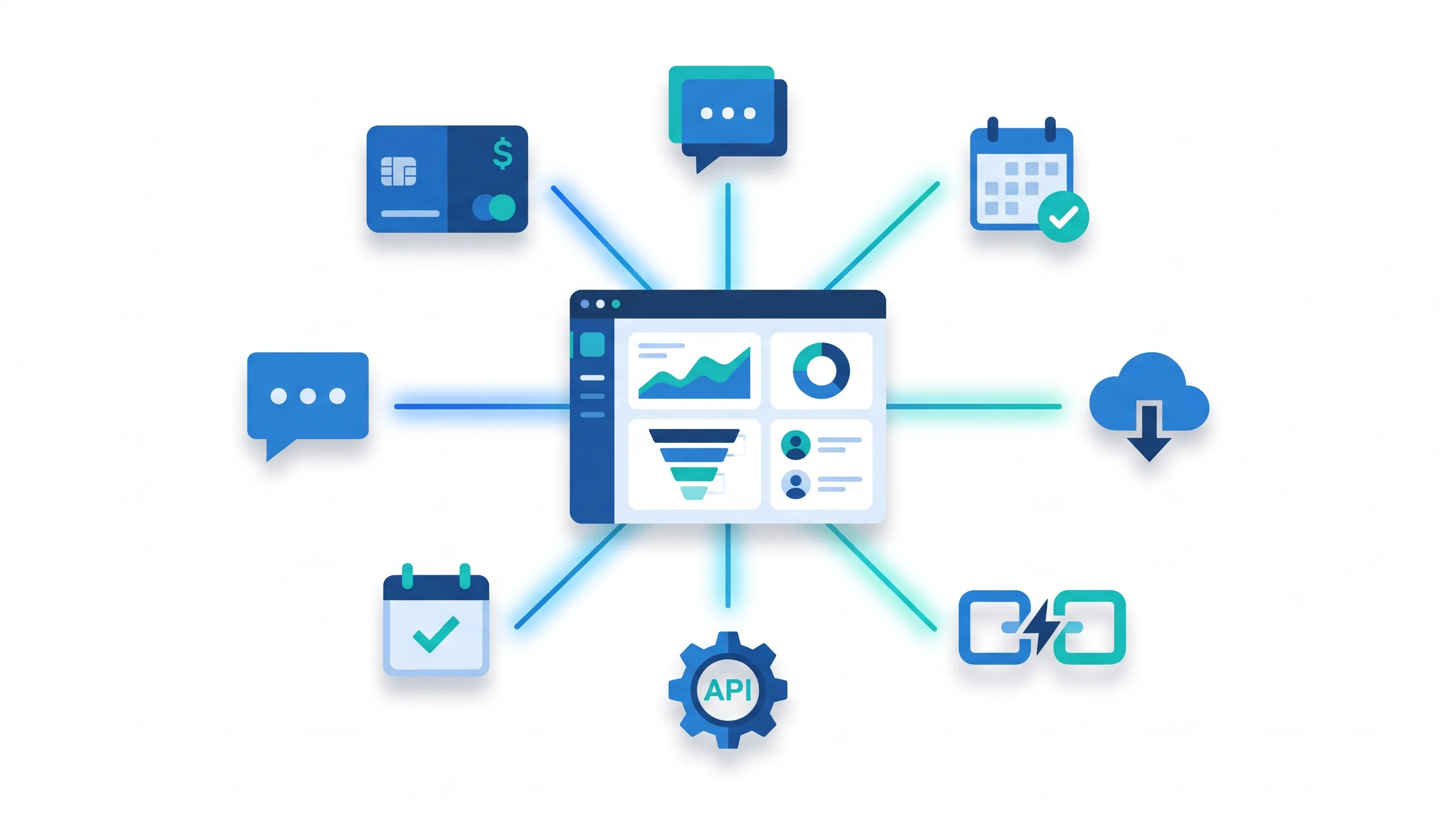
None of these fees change the mechanics of wiring Twilio into an automation; they change the budget line a workflow has to account for before it ships. A reminder sequence, a lead-response text, or a two-way SMS flow built in n8n, Make, or Zapier calls the same Twilio API regardless of which tool triggers it, and the registration and campaign fees above apply the same way no matter which platform sits in front of Twilio.
Pricing a Twilio-based SMS or voice workflow correctly means budgeting the one-time registration cost, the recurring campaign and number fees, and the per-message or per-minute usage rate as three separate line items, not one blended number pulled from the $0.0083 headline. Twilio pricing only reads as expensive or cheap once all three of those line items are on the table at the same time, not just the usage rate a sales page leads with. Our workflow automation team scopes a Twilio build against all three numbers from the start, treating the registration fee, the campaign fee, and the per-message rate as one combined budget line rather than three separate bills a client ends up piecing together on their own.
The rule for budgeting Twilio into a quote
A handful of test messages a month never needs this level of detail; the $0.0083 headline rate is close enough on its own. The threshold is volume, not time. Once a workflow turns into a recurring program, appointment reminders, lead follow-up, review requests, running at real volume every month, the one-time A2P 10DLC registration (plan for $46, the higher of Twilio's own two published numbers, plus the $15 campaign fee) and the ongoing monthly campaign and number fees stop being rounding errors and become the actual floor of the bill. Scope a Twilio-based workflow against that floor from the start, not against the single number printed at the top of the pricing page.