
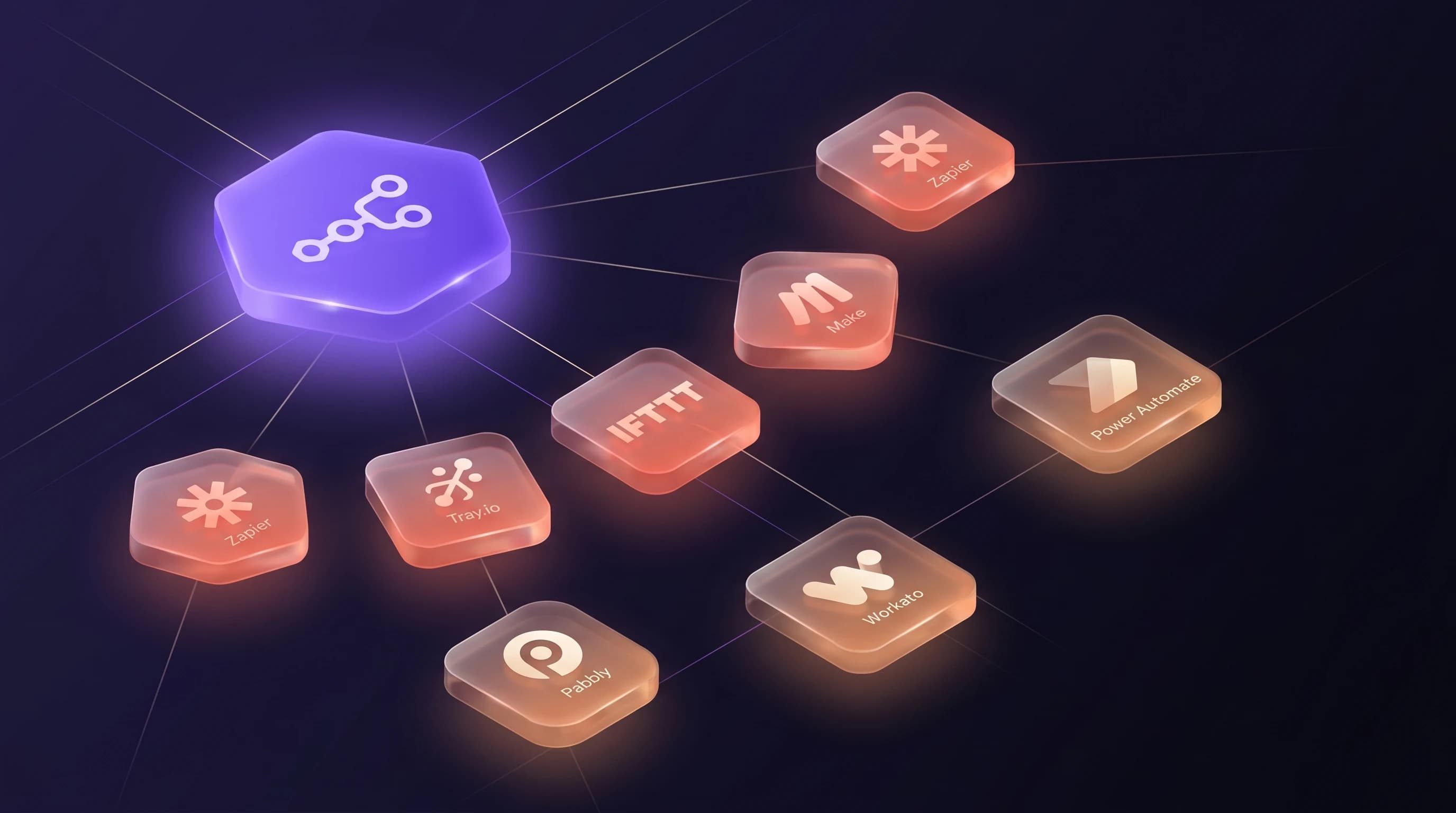
n8n is our default for production workflow automation. We ship n8n workflows for clients almost every week. So why write about alternatives at all?
Because n8n is wrong for some teams, some workflows, and some moments in a company's life. The honest answer to "should I use n8n" is "probably yes, unless." This is the unless list.
TL;DR
- Make is the best n8n alternative for visual-first builders and marketing teams.
- Zapier still wins on connector count, onboarding, and zero-ops simplicity.
- Activepieces is the closest open source one-to-one swap for n8n.
- Pipedream is the right pick if you want code-heavy workflows with serverless.
- Flowise and LangFlow are the AI agent specialists if your workflows are agent-first.
- Pabbly Connect is the budget pick for SMBs running 5 to 20 simple Zaps.
- Migration is harder than vendors admit. Plan 30 to 90 minutes per workflow rebuild.
- Most teams who switch end up keeping n8n for a subset of workflows anyway.
Why people actually leave n8n
Before the alternatives, the symptoms. Every alternative below solves a specific n8n pain. Pick by pain, not by hype.
Self-hosting got out of hand. Your n8n VPS keeps running out of memory. You patched five times last month. The team can't keep up with maintenance. This is the most common reason and the strongest signal to consider a managed alternative.
Non-technical teammates can't read the workflows. Marketing or ops want to see and edit what's running. n8n's data flow gets dense fast. They open a workflow with 12 nodes and bounce.
You hit a connector wall. n8n's library is good but smaller than Zapier's. If your stack lives on a niche SaaS, the missing native connector might be a deal breaker. (Caveat: HTTP Request node solves 90% of these - check before switching.)
You outgrew the AI Agent node. Building agents that need orchestration, memory, observability, and tool routing in n8n's AI nodes feels like fighting the tool. Purpose-built agent platforms might fit better.
The pricing math flipped. n8n Cloud is competitive at low volume but expensive at high volume. If you're between 100k and 500k executions per month and don't want to self-host, Make often wins.
If none of these match your situation, you don't need an alternative. Stay on n8n. Read our n8n templates guide and ship faster instead.
The seven that matter in 2026
1. Make (formerly Integromat)
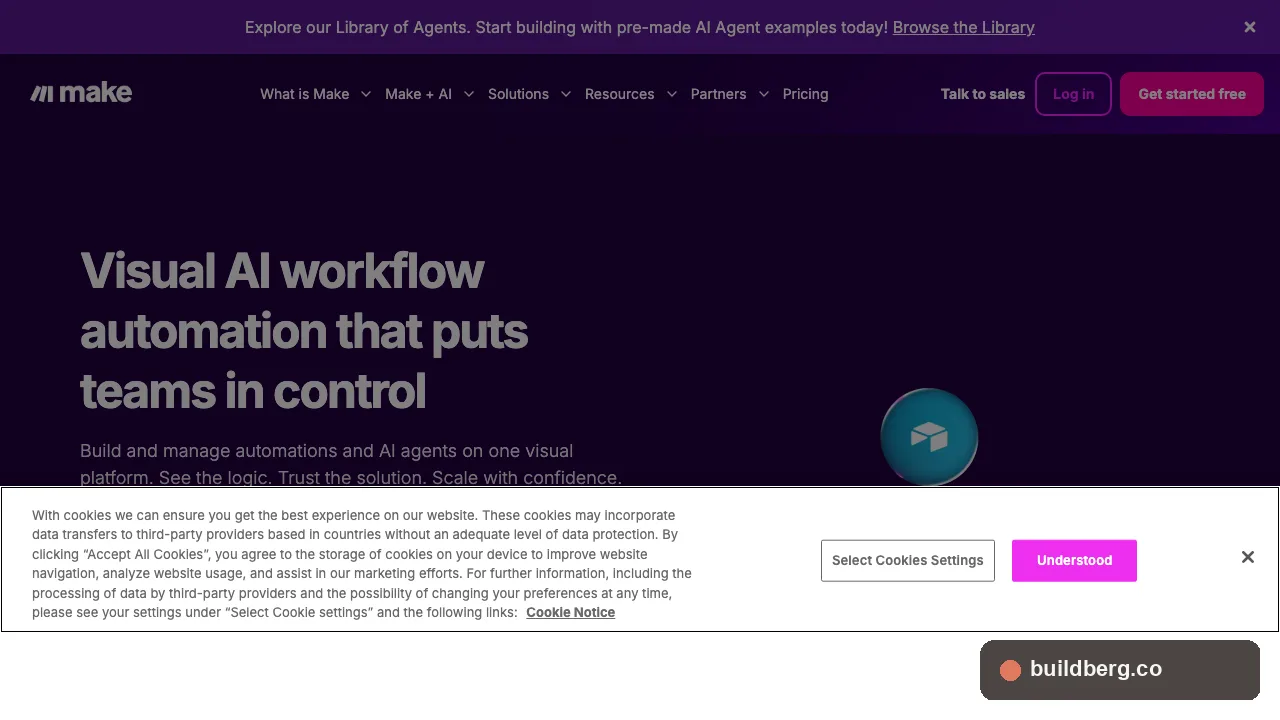
Best for: visual-first teams, marketing operations, agency clients who want to read their own workflows.
Make's scenario canvas is the prettiest in the category. The drag-and-drop modules are intuitive enough that a non-technical client can follow what's happening. Branching logic, error handling, and data mapping all live in one canvas.
The trade-off: Make abstracts more than n8n. When something breaks at the edge - a malformed JSON, a rate limit, a weird API response - debugging is harder because you have less control over the underlying request. The HTTP module helps but it's not as flexible as n8n's.
Pricing is operations-based. The free tier gives 1,000 ops per month. Pro starts around $9 per month and scales reasonably to ~100,000 ops. After that, n8n self-hosted wins on cost by a wide margin.
We use Make for client projects where the client wants to maintain the workflows themselves after handoff. We use n8n for everything we maintain.
For the deeper comparison, see our n8n vs Make vs Zapier breakdown.
2. Zapier
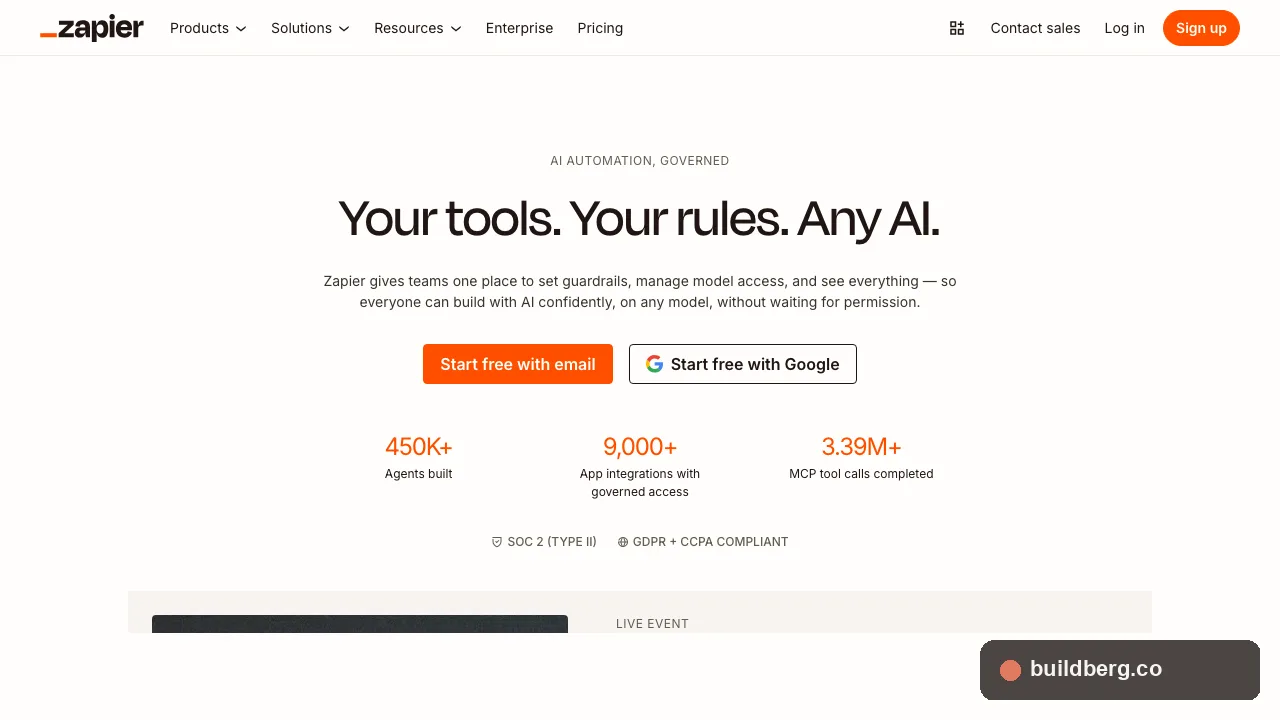
Best for: small businesses, non-technical founders, teams who need a connector that nobody else has.
Zapier's edge is still the connector count. Over 8,000 apps. If your stack includes anything obscure - a regional CRM, a vertical-specific tool, a B2B API with no public docs - Zapier probably has a native integration before anyone else.
The losses: pricing scales aggressively, complex multi-step workflows are awkward (Paths exist but are limited), and AI-native flows feel bolted on rather than core. Zapier shipped Agents and Tables in 2024 to compete on the AI front but the experience still trails n8n's AI Agent node.
For SMBs running fewer than 20 active Zaps, Zapier remains the right answer. The hourly cost of switching tools never pays back at that scale.
3. Activepieces
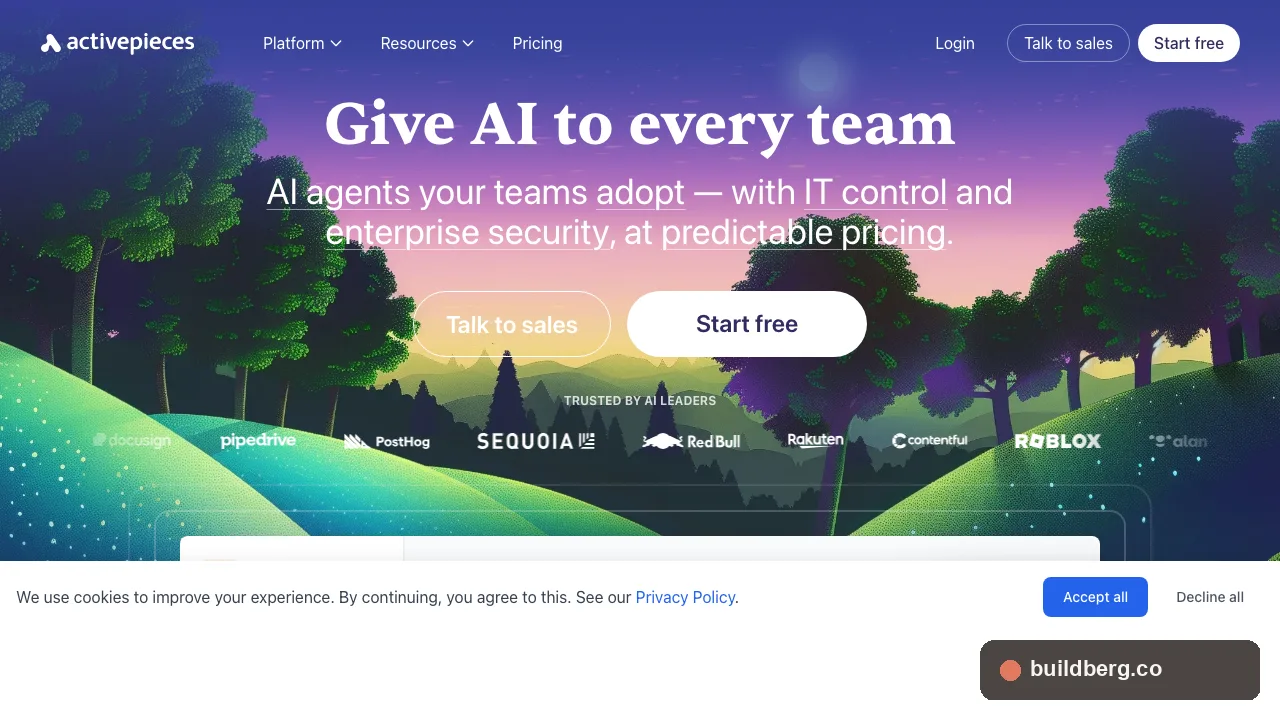
Best for: open source true-believers, teams who want n8n's model with a cleaner UI, self-hosting on a small budget.
Activepieces is the most direct one-to-one open source alternative to n8n. MIT licensed. Self-hosts via Docker. Has a Postgres backend. Visual builder with branching, code steps, and an AI agent piece.
Connector library is smaller than n8n's (~250 vs n8n's 600+) but growing fast. The community has been productive. The UI is arguably cleaner - fewer layout quirks than n8n's editor.
We've shipped two production workflows on Activepieces. Both for clients explicitly asking for an n8n alternative for licensing reasons. The dev experience was good, but we hit two missing connectors and had to write custom HTTP pieces. Plan for that.
4. Pipedream
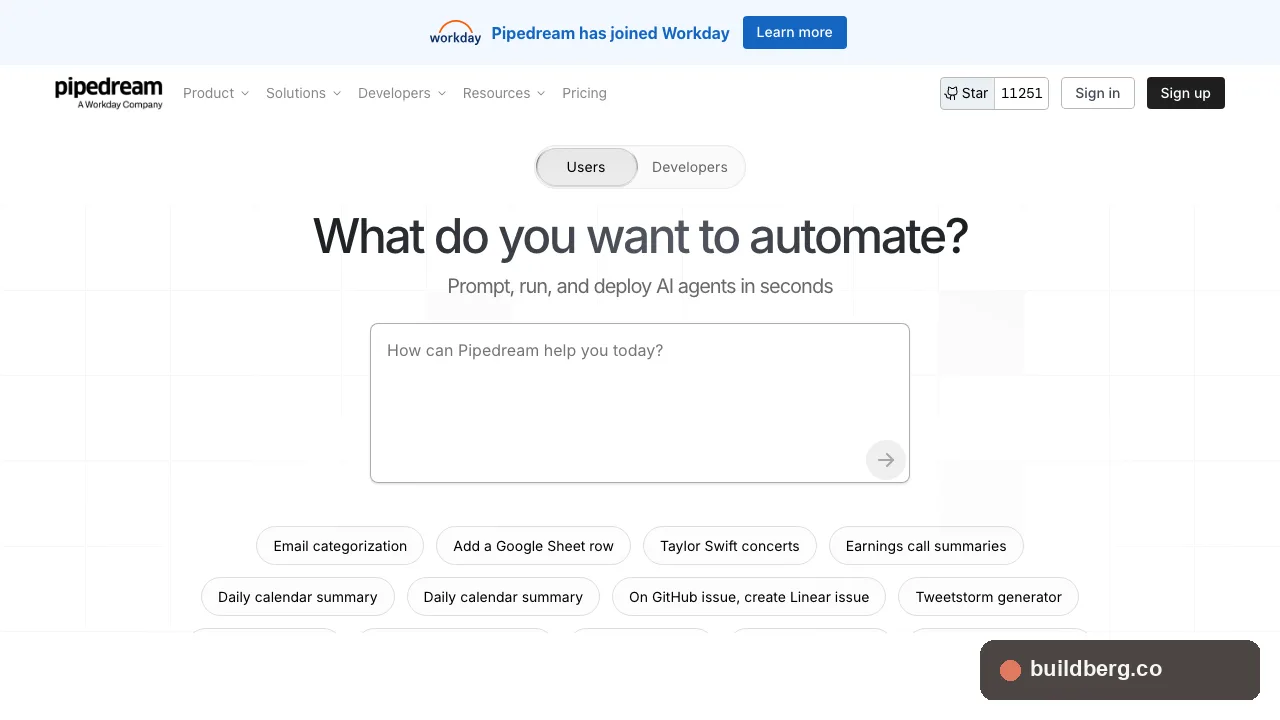
Best for: developers, teams comfortable in JavaScript or Python, workflows that are 50%+ custom code.
Pipedream is the developer's automation tool. Every workflow step can be a code step. The serverless runtime is fast. The component library is deep. You can drop into Node or Python whenever the visual nodes don't fit.
The price model is unusual. Free tier is generous (10,000 invocations per month). Paid tiers add credits. Heavy users find it cheaper than Make for compute-heavy workflows.
We don't use Pipedream for client work because most clients don't have engineers maintaining workflows. For internal tooling at engineering-heavy teams, it's a strong choice.
5. Flowise (and LangFlow)
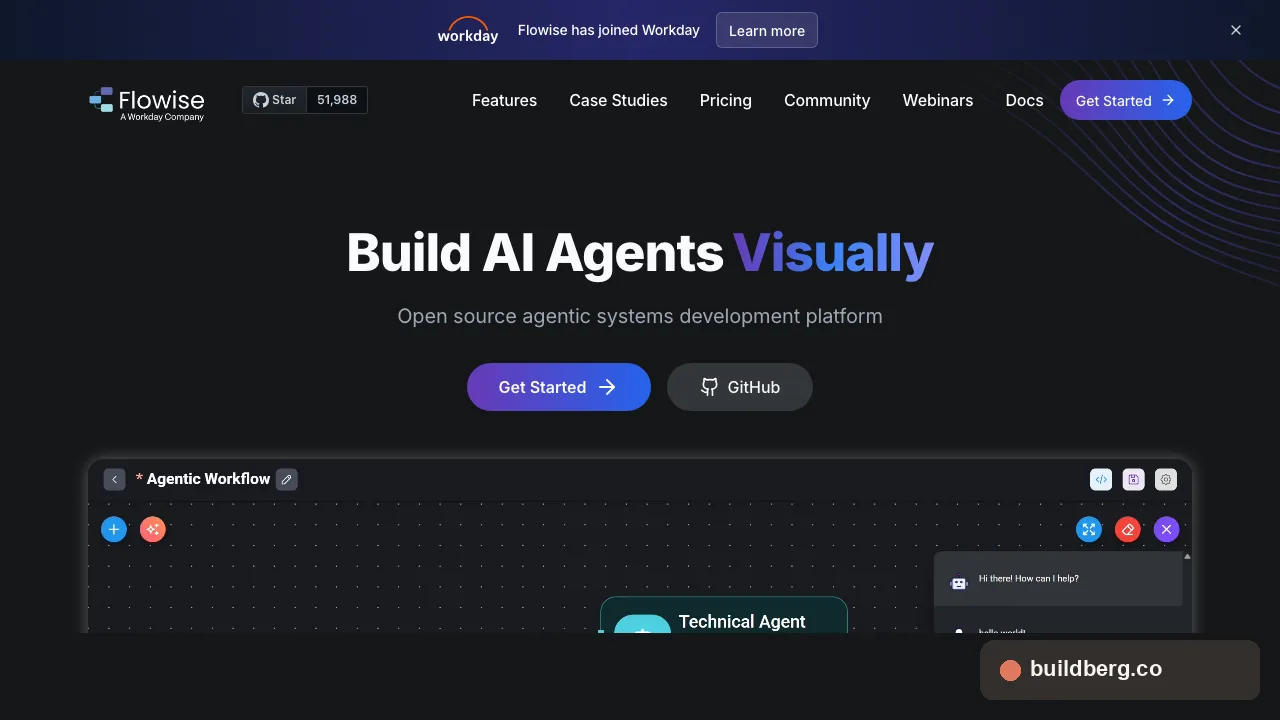
Best for: AI agent workflows, RAG systems, teams whose automation is mostly LLM orchestration.
Flowise and LangFlow aren't general workflow tools. They're AI agent builders. Visual canvas where every node is an LLM, vector store, memory, tool, or chain. If you're building a customer support agent, a research agent, or an internal RAG chatbot, these are purpose-built for that.
Both are open source. Flowise is more product-polished. LangFlow has tighter LangChain integration.
We've used Flowise as a prototyping environment for AI agent projects. For production we usually rebuild in n8n or in code, but Flowise is excellent for the design phase. If your entire automation surface is AI agents, you might never need to leave it.
6. Pabbly Connect
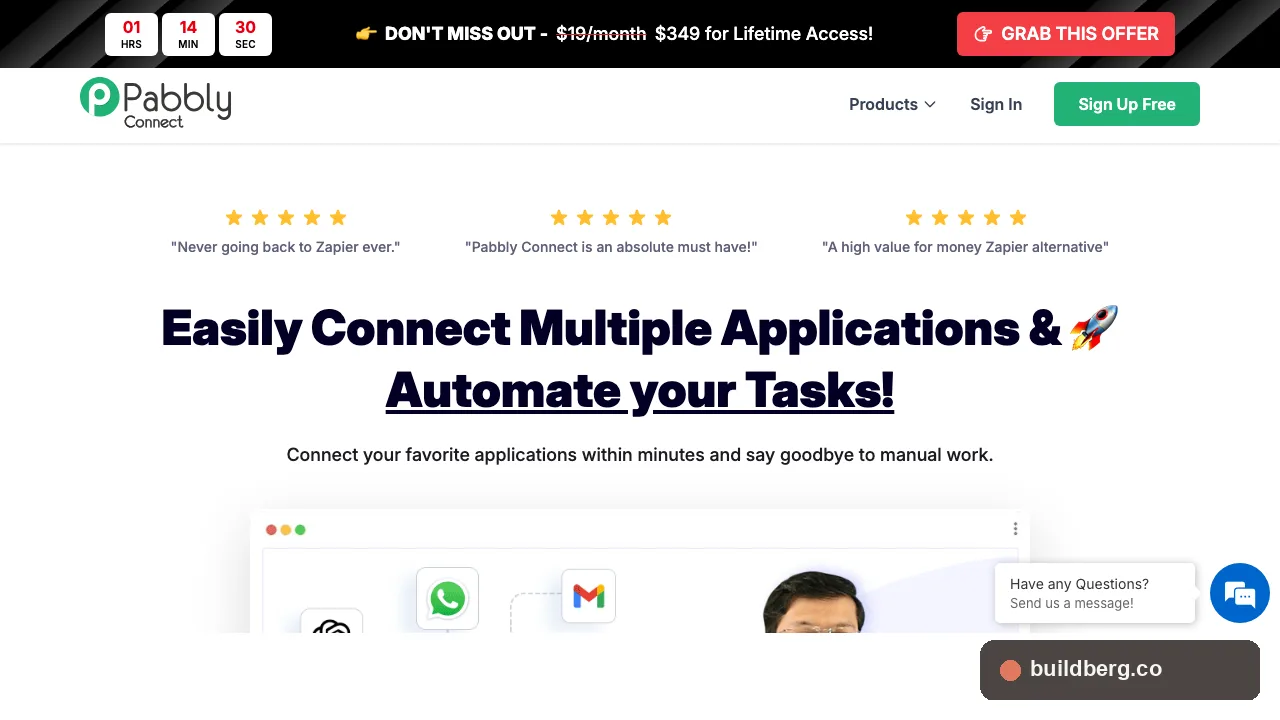
Best for: budget-conscious SMBs, agency owners, anyone running 10 to 30 simple Zaps who hates the Zapier bill.
Pabbly Connect undercuts Zapier and Make on price by a wide margin. Lifetime deal pricing has been available on and off for years. Generous task limits. Decent connector count for the major SaaS players.
The trade-offs: UI is less polished, support is slower, no self-hosting, and the brand carries less weight when you're presenting to enterprise clients. But for an agency owner running their own internal automations, the price-performance is hard to beat.
7. Relay.app
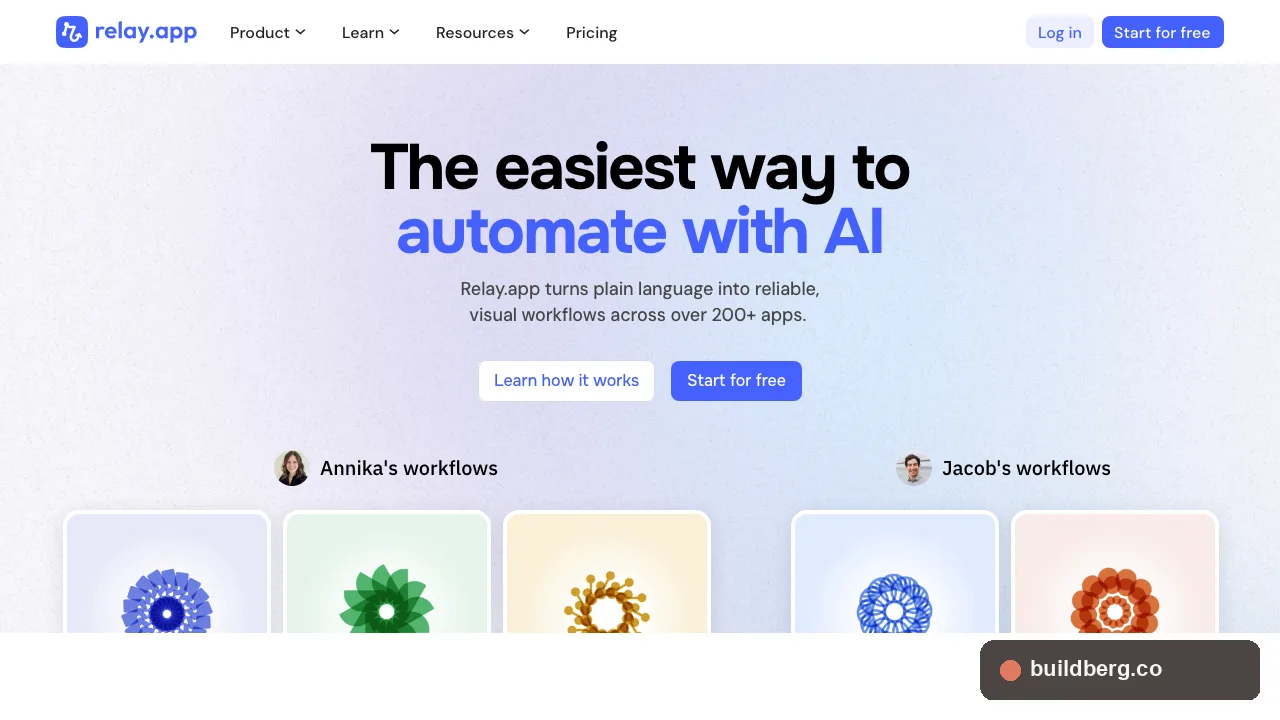
Best for: teams who want AI-native workflows without going full agent platform, human-in-the-loop approval flows.
Relay is newer and opinionated. It bakes AI into every step natively rather than treating LLMs as just another node. The human-in-the-loop pattern is built into the product (workflows can pause and ask a human to approve the next step).
We've watched Relay closely but haven't shipped on it for clients yet. The platform is still maturing. If your workflows include "wait for someone on the team to OK this before continuing," Relay does this more elegantly than n8n's webhook-based approval patterns.
What to ignore
A few names appear in every "n8n alternatives" listicle that we'd skip in 2026:
IFTTT - built for consumer automation, not business. Connector library has stagnated. Don't waste time evaluating.
Workato, Tray.io, MuleSoft - enterprise automation platforms with enterprise pricing. If you're shopping for n8n alternatives, you probably aren't ready for these. They start at $20,000+ per year.
No-code AI agents from VC-funded startups (Lindy, Gumloop, others) - interesting but most are too young to bet a production workflow on. Worth watching, not yet worth migrating to.
The migration math nobody runs
Here's the honest cost of switching, in our experience.
Per workflow rebuild: 30 to 90 minutes for a faithful rebuild on the new platform. Includes auth setup, node-by-node recreation, testing.
Per workflow validation: another 30 to 60 minutes of side-by-side run-and-compare to make sure the new version produces the same outputs.
Total for an agency with 20 production workflows: roughly 30 to 50 hours of engineering time.
At a $100/hr internal rate, that's $3,000 to $5,000 of opportunity cost. n8n self-hosted on a $20/month VPS would take 12 to 25 years to break even on that switching cost.
This is why the right call for most established n8n users is don't switch. Switch only when the pain you're solving justifies the cost. The pains worth switching for are usually about team capability or business model fit, not pricing.
Our recommendation framework
Walk through this in order:
-
Are you self-hosting and the ops feel out of control? Try Make or Zapier for the workflows that don't need self-hosting. Keep n8n for the rest.
-
Are non-technical teammates blocked from contributing? Move client-facing or marketing-team workflows to Make. Keep engineering workflows on n8n.
-
Did you outgrow the AI Agent node? Prototype in Flowise or LangFlow. Production in code or back in n8n with a simpler agent pattern.
-
Pricing is the main complaint? Self-host n8n. The TCO at any volume above 50,000 executions per month is dramatically lower than any managed alternative.
-
None of the above? You don't need to switch. You need better n8n templates and patterns. See our workflow automation services for what we ship.
Closing thoughts
Every "best n8n alternative" listicle wants you to switch because that's how the article gets written and the SaaS gets sold. The truth is most teams who switch from n8n end up keeping it for a subset of workflows anyway - the technical, AI-heavy, self-hosted ones - and adopt a second tool for the rest.
That's not failure. That's right-sizing. Use the right tool for each workflow. We routinely have client engagements running n8n + Make + GoHighLevel + Zapier in production simultaneously. Each does what it does well. The mistake is thinking automation needs to be a single-vendor decision.
If you want help making the call for your own stack, tell us what you're trying to automate. We'll tell you whether n8n is right or whether you need something else - even if "something else" means we don't get the work.
For the broader platform comparison, our n8n vs Make vs Zapier breakdown goes deeper on the three most common picks. And if you're staying on n8n, the n8n templates guide covers where to find production-ready workflows to start from.