
What is an AI employee? Strip away the branding and it is an AI agent, scoped broadly enough to fill a job description instead of one step in a workflow. That is the honest one-line answer, and most of the pages currently ranking for this term will not give it to you that plainly, because a job title sells better than a task list.
The gap between that pitch and the actual deployment is the real story. An AI employee is doing genuine work in businesses today. It is also being sold as a drop-in hire, and that framing skips over what happens the first time it hits a case nobody scoped it for, and who is accountable when it does.
TL;DR:
- An AI employee is an AI agent scoped to a role instead of a task. Same technology, broader job description.
- MIT's 2025 State of AI in Business report found 95 percent of generative AI pilots delivered no measurable financial return, and traced most of that failure to tools that don't retain feedback or adapt to context, not to infrastructure or talent gaps.
- McKinsey's 2025 State of AI survey found 88 percent of organizations use AI in at least one function, but only 23 percent are scaling an agentic AI system anywhere in the business.
- The pattern behind roles that actually hold up is narrow: one job title, one clear success measure, a human owning the exceptions. Full department replacement is a much harder bet.
What "AI employee" actually means
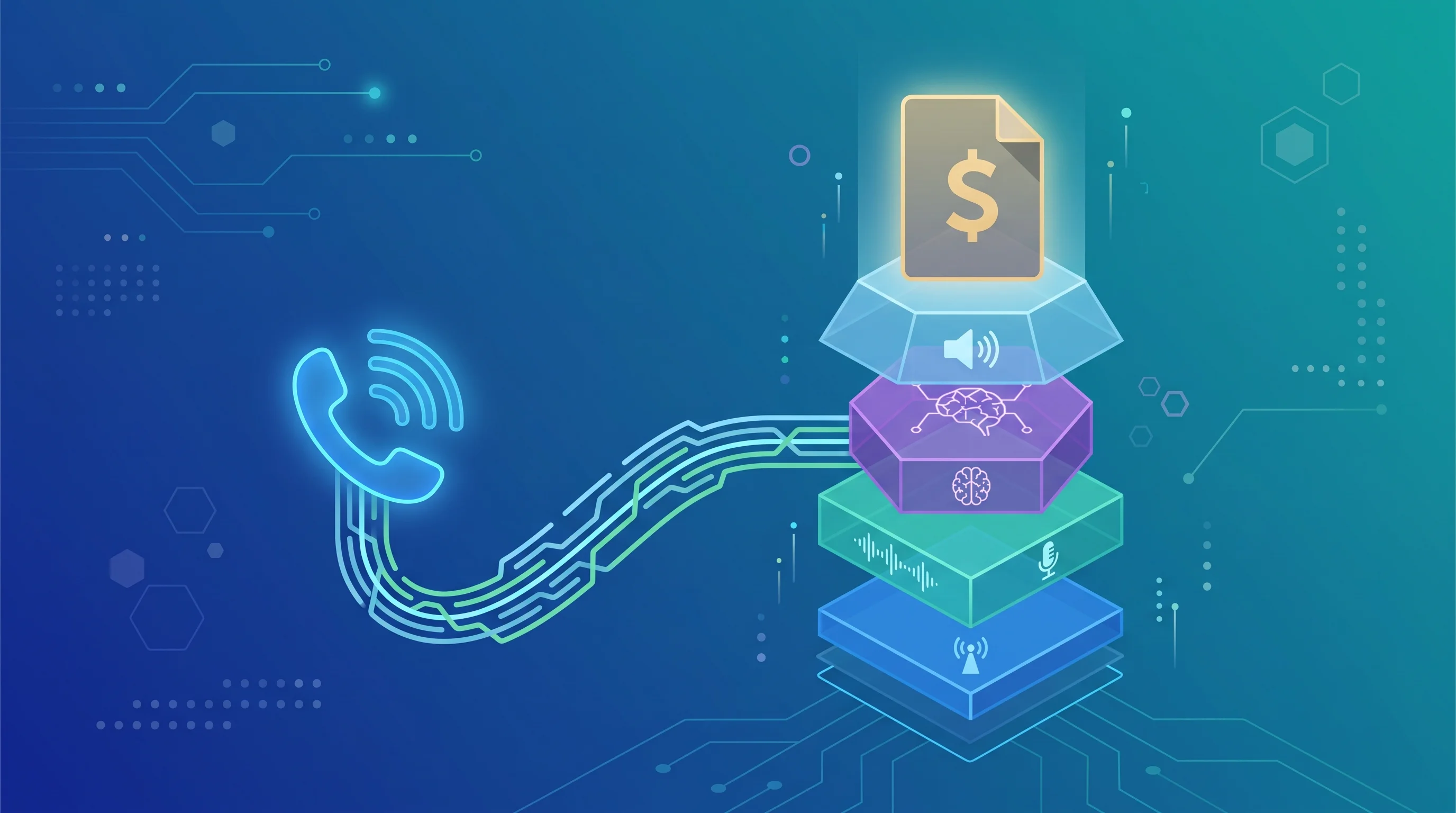
Strip the marketing language and an AI employee is an AI agent: a language model that reads a request, breaks it into steps, calls tools like a CRM, calendar, or phone system, checks its own output, and keeps going until the goal is met or it needs help.
That is the same definition Anthropic uses for agents generally in its guide to building effective agents, which draws the line between a workflow (predefined steps a developer wrote) and an agent (steps the model decides at run time). Nothing in that definition requires a job title.
The "employee" framing is a packaging choice. It sells the same agent as a hire, complete with a name, sometimes a face, and a monthly rate positioned against a salary instead of a software subscription. That framing makes the pitch easier to buy. It does not make the agent capable of more than it was before someone called it an employee.
We covered the underlying autonomy question in more depth in autonomous AI agents: the deployments that hold up in production give the agent the least autonomy that still finishes the job, not the most.
What an AI employee can reliably own today
The working deployments share a pattern: a narrow job, a clear definition of done, and a human who owns whatever falls outside it.
- Outbound and inbound sales development. Qualifying leads, sending follow-ups, and booking meetings on a rep's calendar. Our AI sales agent breakdown covers what separates one that actually books meetings from one that just sends emails.
- Tier-one customer support. Answering the questions that repeat every day and routing anything unusual to a person, which our AI customer service agent guide walks through.
- Phone reception. Answering calls, booking appointments, and handling common requests without a hold queue, the role our voice AI team builds for businesses that lose revenue to missed calls.
- CRM and record upkeep. Logging call notes, updating deal stages, and keeping records current after every interaction, so nothing depends on someone remembering to type it in later.
- Scheduling and rescheduling. Handling the back-and-forth of finding a time that works, without a person in the loop for every message.
Notice what is missing from that list: "run the sales department" or "manage the support team." The roles that hold up are jobs a single junior hire would own, not an org chart.
The real AI employee versus hiring math
As an illustration of the comparison vendors lead with: a US entry-level SDR or support rep often costs an employer several thousand dollars a month once salary, payroll tax, and benefits are added up, while an AI employee subscription for a similarly scoped role is frequently priced at a few hundred to a couple thousand dollars a month. On that comparison alone, the AI employee wins by a wide margin.
That comparison also leaves out three costs the pricing page does not list:
- Setup and integration. Connecting the agent to your actual CRM, phone system, and calendar, not a demo environment, is engineering work, not a subscription toggle.
- Ongoing oversight. Someone still needs to review a sample of its calls or replies, catch drift, and retrain the prompt or workflow when your product or policies change. That is a smaller job than managing a person, but it is not zero.
- The exception path. Every "AI employee" role needs a defined handoff for the cases it should not touch alone. Building and maintaining that handoff is part of the real cost, not an afterthought you deal with once something breaks.
The honest framing: an AI employee is cheaper than a hire for a narrow, well-defined role, once the integration and oversight cost is priced in alongside the subscription. It is not free of management, it just needs a different kind.
Where the "employee" framing breaks down
Three places the marketing goes further than the technology:
Accountability. When a human employee makes a costly mistake, there is a person to have that conversation with and a process to fix it. When an AI employee makes a mistake, someone still has to notice, and it is usually the same team that would have caught it if they had just done the task themselves.
Judgment outside the script. An AI employee is reliable inside the boundaries of what it was scoped and trained to handle. Outside that boundary, an escalated, angry, or unusual case, it does not "use judgment" the way an experienced hire does. It either produces a confident wrong answer or stalls, and both need a human catching it.
Learning on the job. McKinsey's 2025 survey found only 23 percent of organizations report they are scaling an agentic AI system anywhere in the business, with another 39 percent still experimenting. A new human hire improves with feedback and a few months of experience. Most AI employee deployments do not retain that feedback automatically, someone has to build the loop that updates the agent's instructions as it runs into new cases, which is exactly the gap MIT's research points to as the core reason pilots stall.
What it takes to make one actually work
The businesses getting real value from an AI employee are not the ones that bought the broadest job description. They are the ones that scoped the narrowest job first, wired it into their real systems, and built the escalation path before turning it on.
That scoping and integration work is what our AI automation team does before anything goes live: define the one job the agent owns, connect it to your actual CRM and phone system instead of a demo, and set the handoff rule for anything outside that scope. For the predictable steps around the agent, updating records, triggering follow-ups, routing tickets, our workflow automation team builds the connective layer so the agent is not operating in isolation from the rest of your systems.
Key takeaways
- An AI employee is an AI agent with a job title attached. The technology and its limits do not change because of the label.
- The 95 percent of generative AI pilots that showed no financial return, per MIT's research, trace back to tools that don't retain feedback or adapt to context, which is a stronger argument for scoping the job narrowly than any subscription price on a vendor page.
- A real cost comparison against a hire has to include integration and oversight, not just the subscription rate on the pricing page.
- The pattern behind every working deployment is the same: one narrow job, a clear definition of done, and a human owning the exceptions.
If you are evaluating an AI employee for your business, start with the one task you would want it to own end to end, not the department. Tell our AI automation team what that task looks like today and we will scope what it actually takes to hand it off safely.