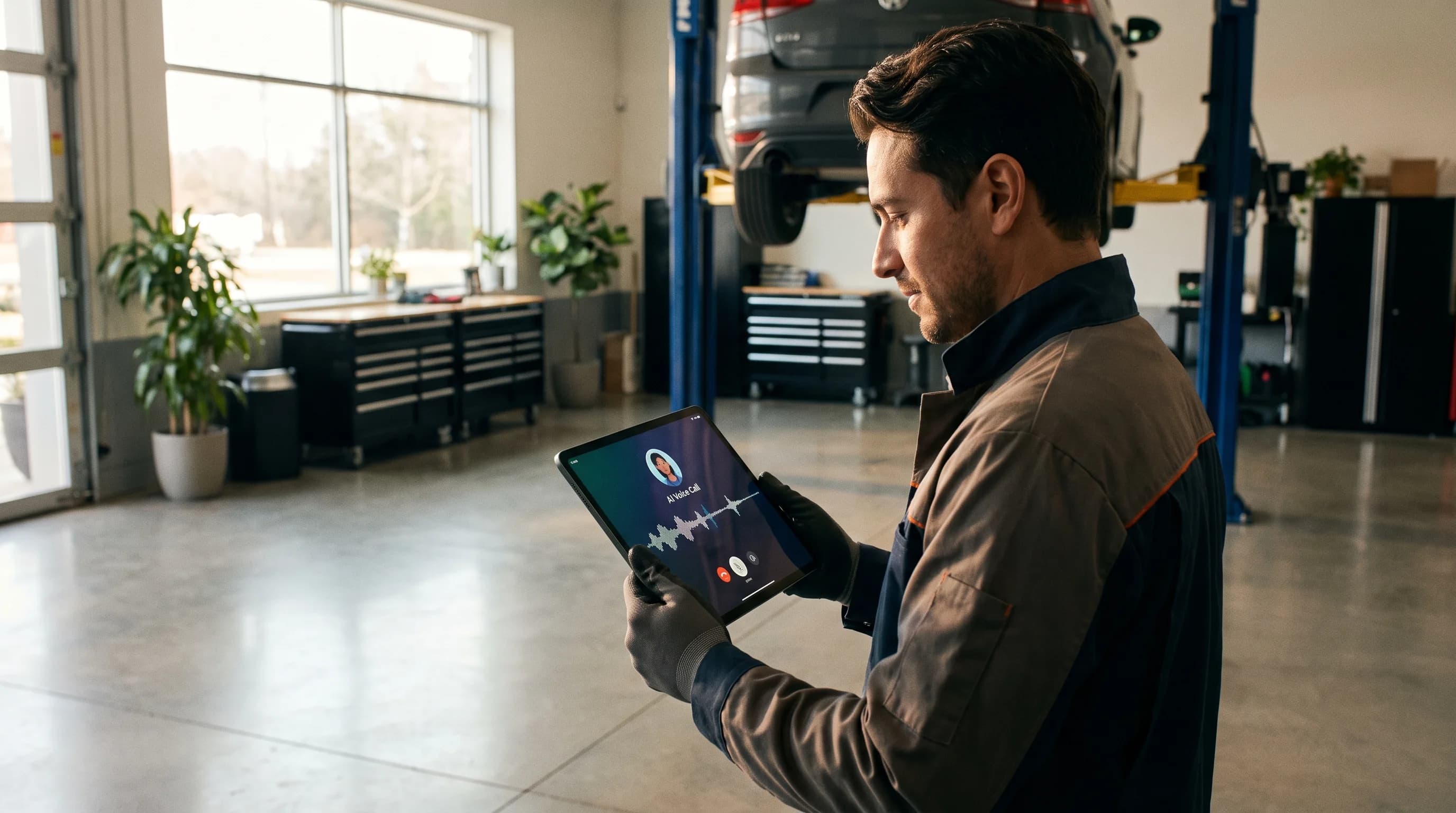
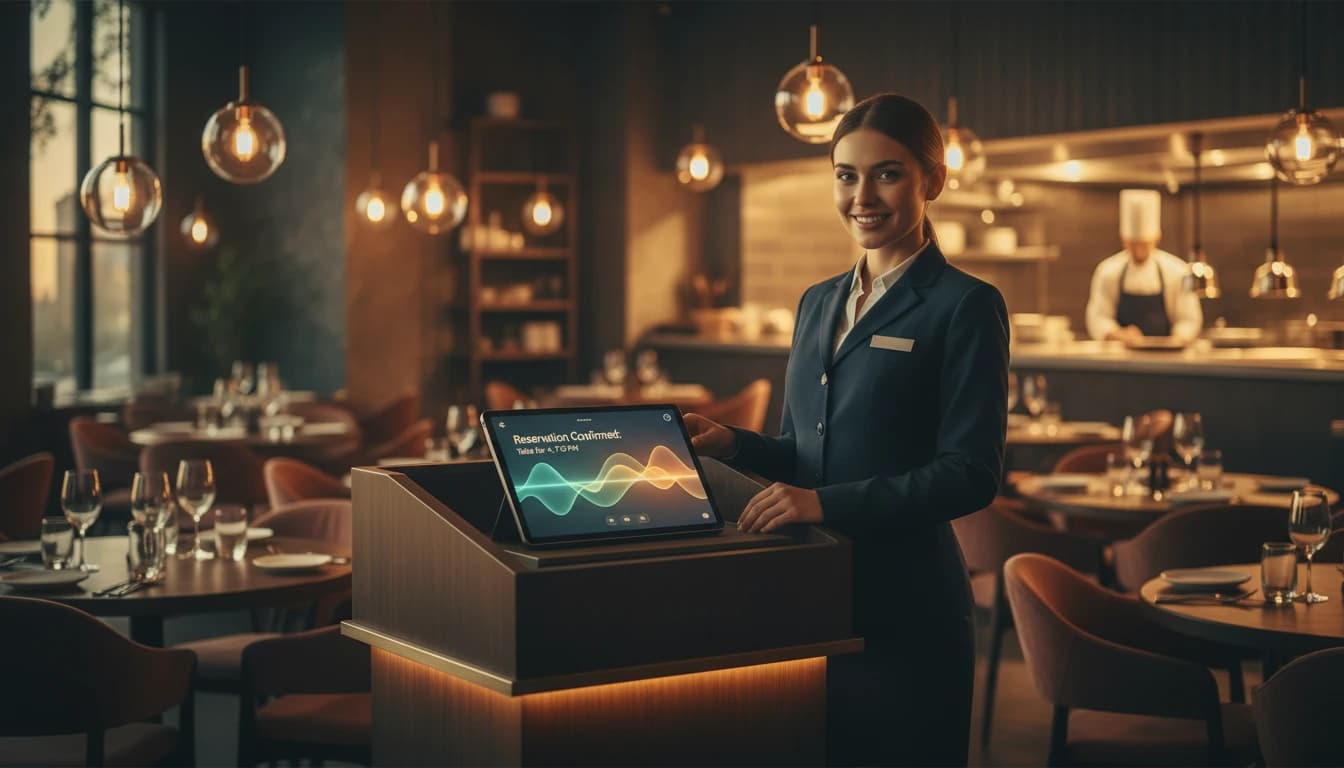
Can an AI voice agent actually take a restaurant order over the phone without getting it wrong, or is that still further out than the marketing suggests?
The short answer is that it already works, but only for the calls it was actually built to handle. The gap between "works in a demo" and "works during a Friday dinner rush" is almost entirely about what the agent is connected to, not how well it talks.
TL;DR:
- An AI voice agent for restaurants answers calls, takes orders, books and changes reservations, and answers menu questions, then writes the result into your POS or reservation system.
- Revmo AI's State of Restaurant Calls 2026 report, based on 12,091 real restaurant call recordings, found quick-service restaurants miss 40.1 percent of incoming calls, at an estimated $73,000 in lost revenue per location a year.
- Full-service restaurants in the same study missed only 9 percent of calls, which means the return on a voice agent is not the same for every restaurant type.
- The National Restaurant Association's 2026 State of the Restaurant Industry report names automation and technology investment as a direct response to a labor market operators still describe as tight.
- The part every vendor page skips is the integration work: an agent that cannot write a completed order or booking back into your POS just delays the missed-call problem instead of solving it.
What an AI voice agent for a restaurant actually handles
Strip away the branding and a restaurant-focused voice agent does five things on a call:
- Answers on the first ring, at any hour, including the middle of a dinner rush when every line is already busy.
- Understands a spoken order, including modifiers like "no onions" or "extra crispy," and reads it back for confirmation.
- Checks live table or slot availability and books, moves, or cancels a reservation.
- Answers repeat questions about hours, location, parking, and menu items, including allergen and ingredient questions if the underlying menu data supports it.
- Hands off to a person when the call goes outside what it can resolve, such as a large private event booking or a complaint.
None of that requires the caller to press a button or navigate a menu tree. The conversation runs like a normal phone call, which is the entire point: a Harris Poll survey of 2,065 U.S. adults conducted for Hostie found phone is still the most common way Americans prefer to reach a restaurant, at 63 percent, ahead of every digital channel.
Why restaurants are actually adopting this now
The Revmo AI report is the most current data point on how badly restaurants handle phone volume today. It analyzed 12,091 actual call recordings across quick-service, fast casual, full-service, and pizza segments, then compared 224 AI-answered calls against 9,187 human-answered calls. The segment breakdown matters more than the headline number:
- Quick-service restaurants miss 40.1 percent of calls and lose an estimated $73,000 a year per location as a result. A 50-location chain loses roughly $3.65 million a year on that basis alone.
- Fast casual restaurants miss 24.8 percent of calls, with greeting consistency dropping 38 points during dinner service compared to slower periods.
- Full-service restaurants miss only 9 percent of calls, the best performance of any segment, with average hold times of 73 seconds when someone is on hold.
- Pizza restaurants answer 93.1 percent of calls, the highest rate measured, but only 28.6 percent of those calls get an upsell attempt.
That data lines up with the labor picture. The National Restaurant Association's 2026 State of the Restaurant Industry report projects the industry will add roughly 100,000 jobs this year, bringing total employment to 15.8 million, while operators say they are directing new investment specifically toward "digital ordering, automation and data analytics." Missed calls are not a staffing problem restaurants can hire their way out of during a rush; they are a coverage problem that shows up at the exact moment staff are already at capacity.
Where it breaks
The failure mode is almost never the voice quality. Modern voice models handle accents, background noise, and interruptions well enough that most callers do not realize they are talking to a system for the first ten seconds. The failure mode is what happens after the call ends.
- Stale menu data. An agent reading from a script that was accurate when it was built will confidently sell an item that sold out an hour ago, unless it is pulling live availability from the POS.
- No write-back to the systems staff already use. If a booked reservation or a placed order lands in a separate inbox instead of the reservation system or the kitchen printer, someone still has to notice it, re-key it, and hope it happened in time.
- Complex modifiers and allergen questions handled by guesswork. A caller asking whether a dish contains a specific allergen needs an answer sourced from real ingredient data, not a plausible-sounding guess from a language model with no menu grounding.
- No clean handoff. When a call goes past what the agent can resolve, a bad implementation loops on "I didn't catch that" until the caller hangs up, which is worse than if no one had answered at all.
Every one of those is an integration problem, not a conversation-quality problem. That is also why the buyer's guides ranking eight vendors on price and feature grids tend to miss the part that actually decides whether the thing works: how deeply it connects to the specific POS, reservation platform, and menu system a given restaurant already runs.
Buy a vertical tool, or build it into your stack
Restaurants generally pick between two paths, and the tradeoff is rarely explained honestly by either side.
Vertical SaaS tools built specifically for restaurants (the RestoHost and Loman category) get a location live fast, usually with a flat monthly fee and pre-built integrations to common platforms like Toast or OpenTable. The tradeoff is that you are limited to whatever menu logic, call flows, and integrations the vendor has already built. A multi-location group with a custom loyalty program or a non-standard POS setup often hits the ceiling of what the tool supports within the first few months.
A custom build on a platform like Retell AI or Vapi costs more upfront and takes longer to launch, but the call flow, the menu logic, and the POS integration are built around the restaurant's actual systems instead of the other way around. For a single independent location, that is usually overkill. For a multi-location group or a group with a non-standard tech stack, it is often the only path that does not eventually require ripping out the vendor tool and starting over.
Our voice AI team builds the second path directly on Retell AI and Vapi, wired into a restaurant's actual POS and reservation systems rather than a generic template, which is the same distinction that separates a demo that sounds good from a system that survives a Friday night rush.
The integration work nobody puts on the pricing page
The part every vendor comparison skips is what has to be built underneath the voice agent for it to actually save a restaurant money: a live connection to the POS for menu and pricing data, a two-way sync with the reservation platform so a booked table shows up where the host stand already looks, and a routing rule for when a call needs a human immediately instead of a callback.
That connective layer is workflow automation, not voice AI on its own. A voice agent that can talk but cannot write a completed order into the kitchen system is a demo, not a deployment. Our workflow automation team handles that wiring for clients who need the voice agent's output to land cleanly in POS, reservation, and reporting systems that already run the business, instead of creating one more disconnected inbox for staff to check.
Key takeaways
- Match the tool to your actual call-miss rate. Quick-service and fast-casual locations missing a quarter or more of calls have the clearest return; full-service restaurants already answering most calls have less to gain.
- The voice quality is rarely the problem. Stale menu data, no POS write-back, and bad handoffs are what turn a working demo into a frustrating call.
- A vertical SaaS tool gets you live fastest; a custom build earns its cost back once your menu logic, loyalty program, or POS setup stops fitting a generic template.
- The integration work, syncing orders and reservations into the systems your staff already use, determines whether the agent saves labor or just adds a new list to check.
If your restaurant group is missing a meaningful share of calls during rush periods and your POS or reservation setup does not fit an off-the-shelf voice tool, that is the specific problem worth scoping before picking a vendor off a ranked list.