Fine-tuning vs RAG, which one should your business actually pay for? The question shows up constantly once a company gets past a demo and has to budget for a real AI feature, and most of what ranks for it answers with model architecture instead of a number you can put in a budget.
Fine-tuning retrains a model on your own examples. RAG, short for retrieval augmented generation, leaves the model alone and hands it relevant documents at the moment someone asks a question. Both get described as "customizing" an AI system. Only one of them changes what you pay per token for the rest of that model's life.
TL;DR:
- Fine-tuning changes how a model behaves (tone, format, structure). RAG changes what a model knows, by retrieving documents at query time instead of retraining anything.
- Fine-tuning GPT-4o mini costs $3 per million training tokens, and the resulting fine-tuned model then runs inference at double the base model's per-token rate, $0.30 and $1.20 per million input and output tokens against the base model's $0.15 and $0.60.
- Pinecone's free tier covers up to 2GB of storage and 1 million read units a month at no cost; its paid Standard tier starts at a $50 monthly minimum once usage grows past that.
- Fine-tuning earns its cost when the problem is about form (consistent structure, tone, tagging), not facts. RAG earns its cost when the problem is current or business-specific information the base model was never trained on.
- Most production systems that need both end up running a hybrid: RAG for the facts, a thin fine-tuned layer for the formatting and voice.
What "fine-tuning vs RAG" actually means, without the jargon
Fine-tuning takes a base model and runs it through additional training on examples you provide, hundreds or thousands of prompt-and-response pairs showing the output you want. The model's internal weights change. After that, every answer it gives reflects that retraining, whether or not the question looks like anything in your training examples.
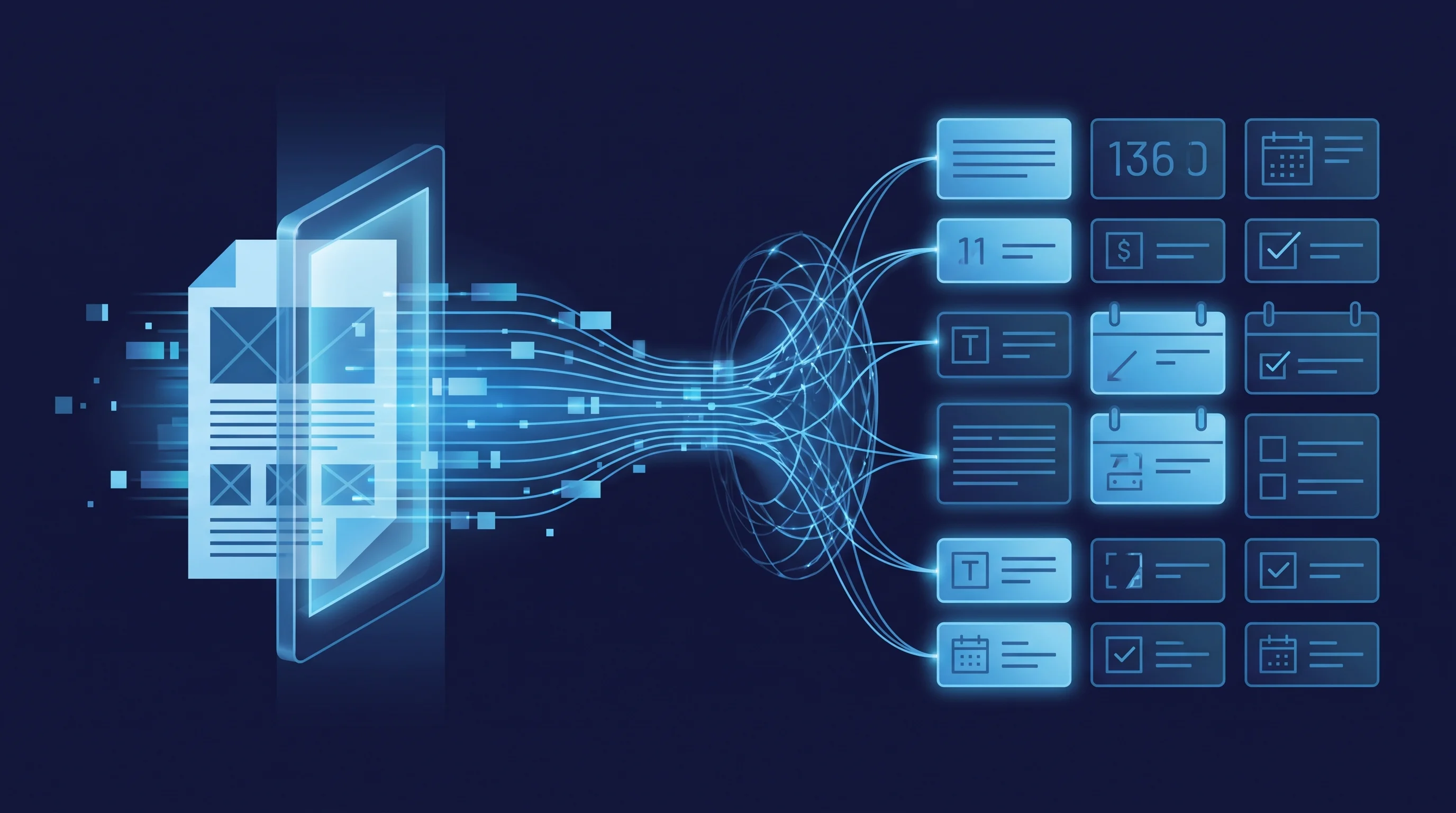
RAG does not touch the model at all. It sits in front of the model: when a question comes in, a retrieval step searches a database of your documents for the most relevant passages, then stuffs those passages into the prompt alongside the question. The model answers using what's in the prompt, the same way it would answer about anything else you pasted in.
That distinction is the whole cost story. Fine-tuning is a training expense plus a permanently higher inference rate. RAG is a storage and query expense that scales with how much you search and how often, with no training step and no change to the model's per-token price.
What fine-tuning actually costs
OpenAI's own pricing for GPT-4o mini makes the fine-tuning cost structure concrete instead of abstract. Training a fine-tuned version costs $3 per million tokens processed during the training run. That's a one-time charge, paid when you create or update the fine-tuned model.
The part that surprises people is what happens after training finishes. A fine-tuned GPT-4o mini model doesn't run at the base model's rate. The base model prices input tokens at $0.15 per million and output at $0.60 per million. The fine-tuned version of the same model runs input at $0.30 and output at $1.20 per million, exactly double, on every single call for as long as that model stays in production.
As an illustration: a support bot generating, say, 100 million output tokens a month, a plausible volume for a business fielding a few thousand conversations a day, pays roughly $1,440 a year in output costs alone at the fine-tuned rate, versus about $720 a year on the base model's rate for the same volume. That gap compounds for as long as the fine-tuned model keeps running, which is why the training fee is rarely the real cost of fine-tuning. The ongoing inference premium is.
What RAG actually costs
RAG's cost lives in a different place: a vector database that stores your documents as searchable embeddings, plus however many queries hit it. Pinecone's Starter tier is free up to 2GB of storage, 1 million read units, and 2 million write units a month, which covers a surprising amount of a small business's internal documentation or support content before any bill shows up.
Past that, Pinecone's Standard tier has a $50 monthly minimum, with unlimited storage billed at $0.33 per GB and read units priced between $16 and $18 per million depending on cloud region. Those read-unit charges are the part that scales with usage: every question a user asks triggers a retrieval call, so query volume drives the bill, not a one-time training run.
The model itself still charges its normal per-token rate for generating the answer, at the base model's price, since RAG doesn't touch the model's weights or its pricing tier. That's the structural advantage: you pay for retrieval and storage separately from inference, instead of paying a permanent markup on every token the model ever generates.
A RAG pipeline that feeds a client's help center content into their support workflow is a common build inside our AI automation projects, precisely because the underlying documents change weekly and nobody wants to pay a retraining bill every time a policy page gets edited.
When fine-tuning is actually the right call
Fine-tuning earns its cost when the problem is about form, not facts. If a model already knows the right answer but delivers it in the wrong format, inconsistent JSON, a tone that doesn't match a brand, a classification label it won't stick to across a prompt, fine-tuning locks that behavior in more reliably than a long system prompt ever will.
OpenAI's own fine-tuning guidance frames this as model optimization rather than knowledge injection, which matches what the pricing structure implies: you're paying to change behavior permanently, not to hand the model new facts that will be stale again next month.
When RAG is actually the right call
RAG wins whenever the knowledge itself changes faster than a retraining cycle makes sense, pricing pages, support documentation, policy updates, inventory, or anything else that gets edited on a normal business schedule. Retraining a model every time a price list changes is both slower and more expensive than updating a document in a vector database, which takes effect on the next query with no training run at all.
RAG also gives you something fine-tuning structurally can't: source attribution. Because RAG retrieves actual documents, a well-built pipeline can show which document an answer came from, which matters anywhere a business needs to point to the source behind a claim rather than just trusting the model's output.
The hybrid most production systems actually run
Few real deployments pick one technique and stop there. The common pattern pairs RAG for facts with a lightly fine-tuned layer for formatting and voice: the retrieval step supplies current information, and the fine-tuning handles turning that information into the specific structure or tone the business needs, a consistent summary format, a branded voice, a required set of fields in every response.
That hybrid is also where a RAG pipeline stops being a standalone chatbot and starts feeding the rest of a business's systems. Once retrieval is pulling the right documents reliably, the natural next step is wiring that output into whatever already runs the business, updating a CRM record, triggering a follow-up sequence, routing an exception to a human. Our workflow automation team usually gets pulled in at exactly that point, connecting the AI layer to the systems that act on what it finds instead of leaving it as a chat window nobody built a next step for.
The rule to apply before you build either one
If you can't name the specific documents that would make the model's answers better today, fine-tuning won't fix that, because fine-tuning doesn't add knowledge, it changes behavior. And if the model already knows the right answer but keeps delivering it in the wrong shape, no amount of retrieval will fix that, because RAG doesn't touch how the model formats a response.
Match the technique to which half of the problem you actually have, and if you have both halves, budget for both costs rather than treating one as a substitute for the other. Tell our AI automation team what your model is getting wrong today, the facts or the format, and we'll show you which side of this decision your budget should actually go toward.