Every gohighlevel review on the first page of Google says the same three things: it is an all-in-one platform, it has a steep learning curve, and email deliverability is shaky. All true, all useless if you are trying to decide whether to actually buy it. This 2026 review is written from the seat we sit in every day - an agency that builds, hosts, and bills on top of GoHighLevel for paying clients. The angle most reviews miss is the actual cost to run it and the 2026 stack you should be layering on top.
TL;DR
- GoHighLevel in 2026 is still the strongest white-label agency platform on the market. Nothing else credibly competes on sub-account multi-tenancy plus SaaS resale.
- Real total cost is higher than the $97 / $297 / $497 sticker once you add email, SMS, call, and AI usage. Budget another $80 to $200 a month for a small agency.
- The biggest weakness is not the tool - it is operator skill. Deliverability, 10DLC, and onboarding flow are exposed as user configuration. Skip them and you burn deliverability across every client.
- The 2026 winning pattern: GHL as the system of record + Retell, Vapi, or Bland for voice + n8n for the orchestration GHL workflows cannot handle + a real analytics layer on top.
- Buy GHL if you run an agency with three or more clients or you want to resell software. Do not buy it as a personal CRM.
What GoHighLevel actually is in 2026
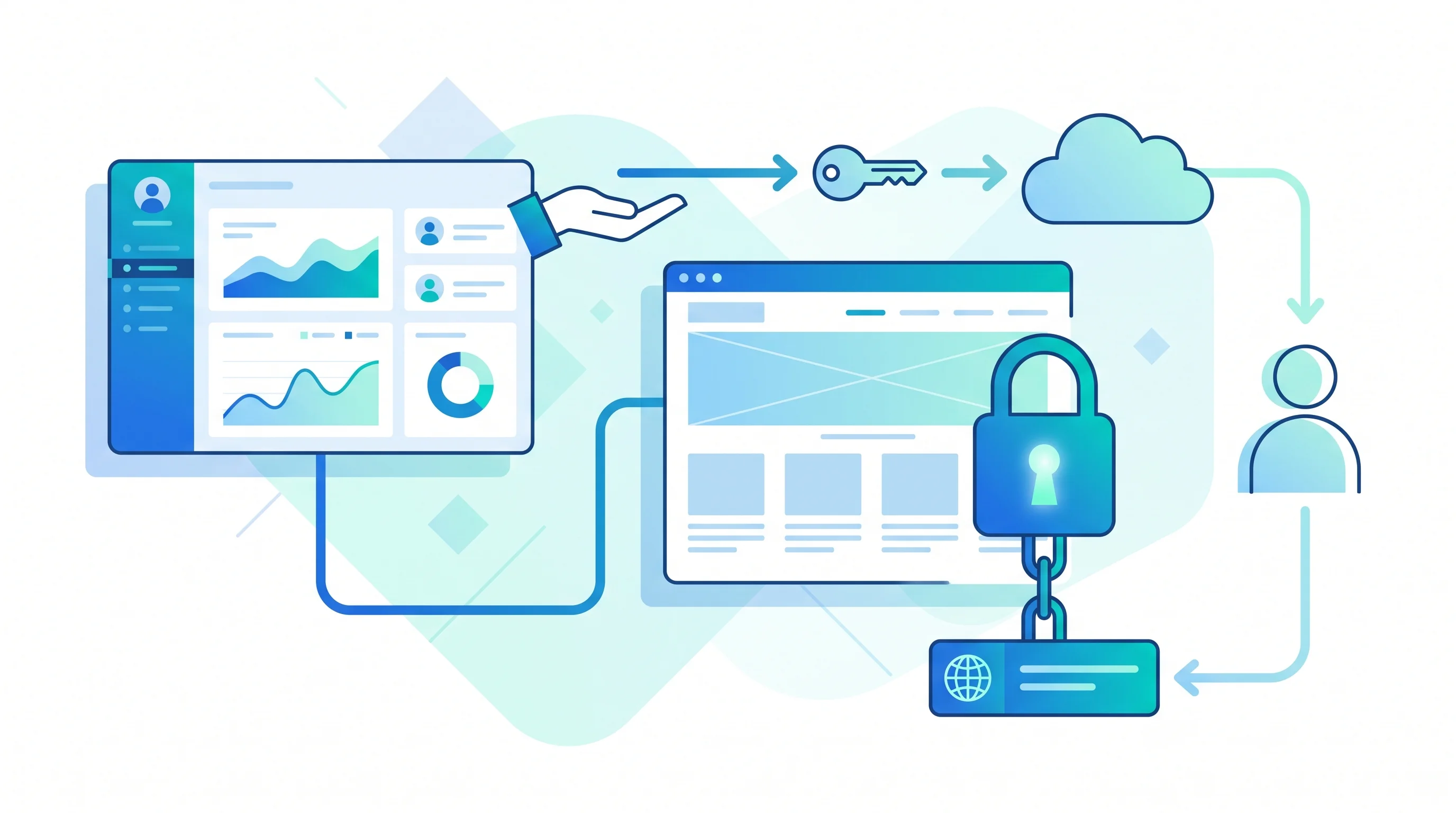
GoHighLevel (often shortened to GHL) is a multi-tenant marketing and CRM platform built for agencies. One agency account holds many sub-accounts, each one acting as a fully-featured CRM, marketing automation system, calendar, funnel builder, reputation manager, and conversation hub for a single client business.
What makes it different from HubSpot, Salesforce, or ActiveCampaign is the agency model. You can:
- Spin up unlimited sub-accounts on the Unlimited plan and above
- White-label the entire interface under your agency's brand
- Resell the platform to clients with markup on top of GHL's wholesale price
- Carry one global asset library (snapshots, workflows, templates) across every client
- Bill clients for usage and keep the markup
That last point is why agencies pick GHL over a "real" CRM. You are not just consolidating tools - you are buying a wholesale SaaS product to resell.
Pricing in 2026: what you actually pay
The three plans have not changed much in 2026, but the usage math has.
| Plan | Sticker price | Sub-accounts | Real monthly cost for a 5-client agency |
|---|---|---|---|
| Starter | $97 / mo | 3 | $97 + ~$50 usage = ~$147 |
| Agency Unlimited | $297 / mo | unlimited | $297 + ~$150 usage = ~$447 |
| SaaS Pro | $497 / mo | unlimited + SaaS Mode | $497 + ~$200 usage = ~$697 |
Annual billing saves about 17 percent (two months free). Usage on top of the plan is where new agencies get surprised:
- Email: roughly $0.0075 per send. A client doing 50,000 emails a month adds about $37.
- SMS: roughly $0.0079 per US segment, plus a small per-number rental. A client sending 5,000 SMS a month adds about $40.
- Voice: about $0.014 per outbound minute, $0.0085 per inbound. A 200-call-a-day reception agent eats $400 to $600 a month easily.
- AI features: $0.02 to $0.07 per interaction across Conversation AI, Voice AI, Reviews AI, Content AI, and Workflow AI.
The SaaS Pro plan unlocks rebilling with markup, which means you can charge clients more than your wholesale cost on every email, SMS, call, and AI interaction. That is how SaaS-mode agencies turn usage into a second revenue line.
The pros, written from inside the platform
Every agency review lists pros. Here are the ones that survive contact with paying clients.
1. One bill replaces five tools
A typical small business stack in 2026 looks like a $50 CRM + $40 email tool + $60 SMS + $30 calendar + $80 funnel builder + $50 reputation tool. That is $310 a month for tools that barely talk to each other. GHL replaces it with one $97 sub-account that does talk to itself.
2. White label is uniquely strong
The fact that you can rebrand the entire mobile and web app, run it on your own subdomain, and ship clients a login page with your logo is still hard to find anywhere else. Pipedrive and HubSpot do not let you do this. Salesforce will, but you need an Experience Cloud team and six months.
3. Snapshots compound
Once you build a clean snapshot of your repeatable offer, you can spin up a new sub-account in under five minutes. We cover what to actually put in a snapshot in our best GoHighLevel snapshots guide. The compounding here is real: the third client in a niche costs you almost no setup time.
4. Workflows are good enough for 80 percent of automation
GHL workflows handle the standard agency patterns well: missed-call text-back, appointment reminders, no-show recovery, review requests, abandoned funnel follow-up. The trigger and action library is broad enough that you rarely need to leave the platform for these.
5. Voice AI works through webhooks
The 2026 unlock is connecting GHL workflows to a dedicated voice AI provider. Inbound call comes in, GHL fires a webhook to Retell or Vapi, the voice agent runs the conversation, then posts outcome and transcript back into a contact's custom fields. We compare the providers in our Retell vs Vapi vs Bland breakdown, and we ship this pattern through our voice AI service.
The cons, written honestly
1. The learning curve is real
A new operator takes 60 to 90 days to feel confident across CRM, funnels, workflows, calendars, and reputation. The interface buries important settings (custom values, location-level settings, agency settings, SaaS configurator) under different menus. If you do not budget the ramp-up, you will hate the tool by week three.
2. Deliverability is exposed as user config
This is the complaint that dominates every gohighlevel review on Reddit. The platform does not hide 10DLC registration, sender domain SPF/DKIM/DMARC, warm-up, or A2P compliance from you. New agencies skip these steps, then wonder why their emails land in spam and their SMS gets throttled. The tool is not broken - the operator is.
We treat deliverability as a setup deliverable on every onboarding: domain auth, dedicated IP pool where it matters, 10DLC at sub-account level, and a two-week warm-up schedule. The complaints disappear when this is done.
3. Reporting is shallow
GHL's native reports are fine for "calls this week" or "appointments booked." They are not fine for cohort analysis, channel attribution, or revenue forecasting. For anything past the basics, we ship a real analytics layer on top, usually pushing GHL data into BigQuery or PostgreSQL and rendering it in Looker Studio or Power BI.
4. Individual features are not best-in-class
The funnel builder is not as polished as Unbounce. The forms are not as flexible as Typeform. The email editor is not as good as Klaviyo's. The trade-off is consolidation: one tool, one bill, one source of truth on the contact, instead of five tools you have to glue together. Most agencies decide that is worth it. Some do not.
5. The mobile app is rough
The white-label mobile app crashes during long phone calls and has unreliable push notifications. Anyone whose business depends on mobile-first staff (field service, real estate showings) should test this hard before committing.
The 2026 stack we run on top of GHL
This is the section every other gohighlevel review skips. The platform is the system of record. Everything that makes it sing in 2026 lives on top of it.
Orchestration past native workflows
GHL workflows hit a ceiling when you need branching logic across multiple systems, complex data transformation, or batch processing. That is where we run n8n alongside it. GHL fires a webhook, n8n does the heavy lifting (Airtable lookup, Stripe enrichment, Slack notification, document generation), then posts results back into GHL custom fields.
Voice AI for reception and outbound
Retell, Vapi, or Bland take over the phone line. We cover how to choose between them in our voice AI comparison. GHL still owns the contact, the calendar, and the pipeline. The voice agent is just a smarter switchboard.
Analytics and revenue reporting
GHL's reports are operational, not analytical. For weekly leadership reviews we pipe GHL into a warehouse and report against it. This is the part most agencies underestimate, then realise they cannot answer "which campaign actually drove revenue last quarter" without it.
AI receptionists for niche verticals
The cleanest fit we see in 2026 is dental and home services. The combo of GHL as the CRM, Voice AI for the phone line, and a tight n8n integration for the practice management system turns a $400 a month tool into a $4,000 a month retainer for the agency. We walk through the dental version in detail in our Open Dental AI receptionist guide.
Who GoHighLevel is for in 2026
Buy GHL if you are:
- An agency running three or more client retainers
- A coach, consultant, or course creator running funnels, email, SMS, and bookings under one roof
- A local service business with multiple locations that wants one CRM
- A SaaS reseller who wants to white-label marketing software
Skip GHL if you are:
- A solo freelancer with one or two clients - the operational overhead is not worth it
- A pure ecommerce store on Shopify - Klaviyo + Shopify Flow will beat it
- A B2B SaaS internal RevOps team - HubSpot or Salesforce will beat it
- Someone who wants a plug-and-play CRM with no setup work - GHL needs operator skill
For the deeper head-to-head against the obvious enterprise alternative, see our GoHighLevel vs HubSpot comparison.
Final verdict
In 2026, GoHighLevel is still the best agency platform on the market, but it is not the best CRM, not the best email tool, and not the best funnel builder. It is the best business-in-a-box for agencies that want to resell software and consolidate operational chaos for their clients. That distinction matters.
Our internal score: 4.4 out of 5. The one point off is for deliverability friction, the rough mobile app, and a reporting layer that demands you bring your own warehouse. If those three are dealbreakers, walk away. If they are not, GHL is the cheapest way to run a serious agency in 2026, provided you do the boring setup work and layer the right tools on top.
Ready to put GHL to work without spending 90 days fighting the platform? That is what we do at Buildberg. We ship GoHighLevel builds end-to-end (snapshot, deliverability, voice AI, analytics) on our GoHighLevel automation service, and we layer in workflow automation and voice AI for the patterns GHL alone cannot ship.