Can you run healthcare workflow automation on a tool like Zapier or Make and stay HIPAA compliant?
No, not if any step in that workflow touches a patient's name, appointment time, diagnosis, or any other identifier tied to their health information. That answer is buried or missing entirely in most of the guides ranking for this topic, which tends to matter more to the practice getting fined than the blog post that skipped it.
TL;DR:
- Healthcare workflow automation only stays legal if every platform that touches protected health information (PHI) has a signed business associate agreement (BAA) with the practice.
- Zapier and Make both state outright that they do not sign BAAs, which rules them out for any step that carries patient identifiers, even though they remain fine for non-PHI internal notifications.
- The 2025 CAQH Index found the U.S. healthcare system avoided $258 billion in administrative costs through automated transactions in 2024, with a further $21 billion in savings still on the table.
- The workable pattern is a split build: a BAA-covered layer for anything touching PHI, and ordinary no-code tools for the parts of the process that never see patient data.
What healthcare workflow automation actually automates
Strip away the vendor language and healthcare workflow automation covers a short, repeatable list of tasks:
- Patient intake. A form or portal submission that populates the EHR without someone re-typing it.
- Appointment reminders and rescheduling. Automated texts or calls that fire on a schedule instead of a staff member working a call list.
- Insurance eligibility verification. A check that runs before the visit instead of at the front desk while the patient waits.
- Lab order and result routing. Results that reach the ordering provider automatically instead of sitting in a fax queue.
- Billing and EHR sync. A completed visit that updates the billing system without a second manual entry.
None of this is exotic. What makes healthcare workflow automation different from a generic business process build is that almost every item on that list involves protected health information, which changes which tools are even legally allowed to touch it.
The compliance gate that decides which tool you can use
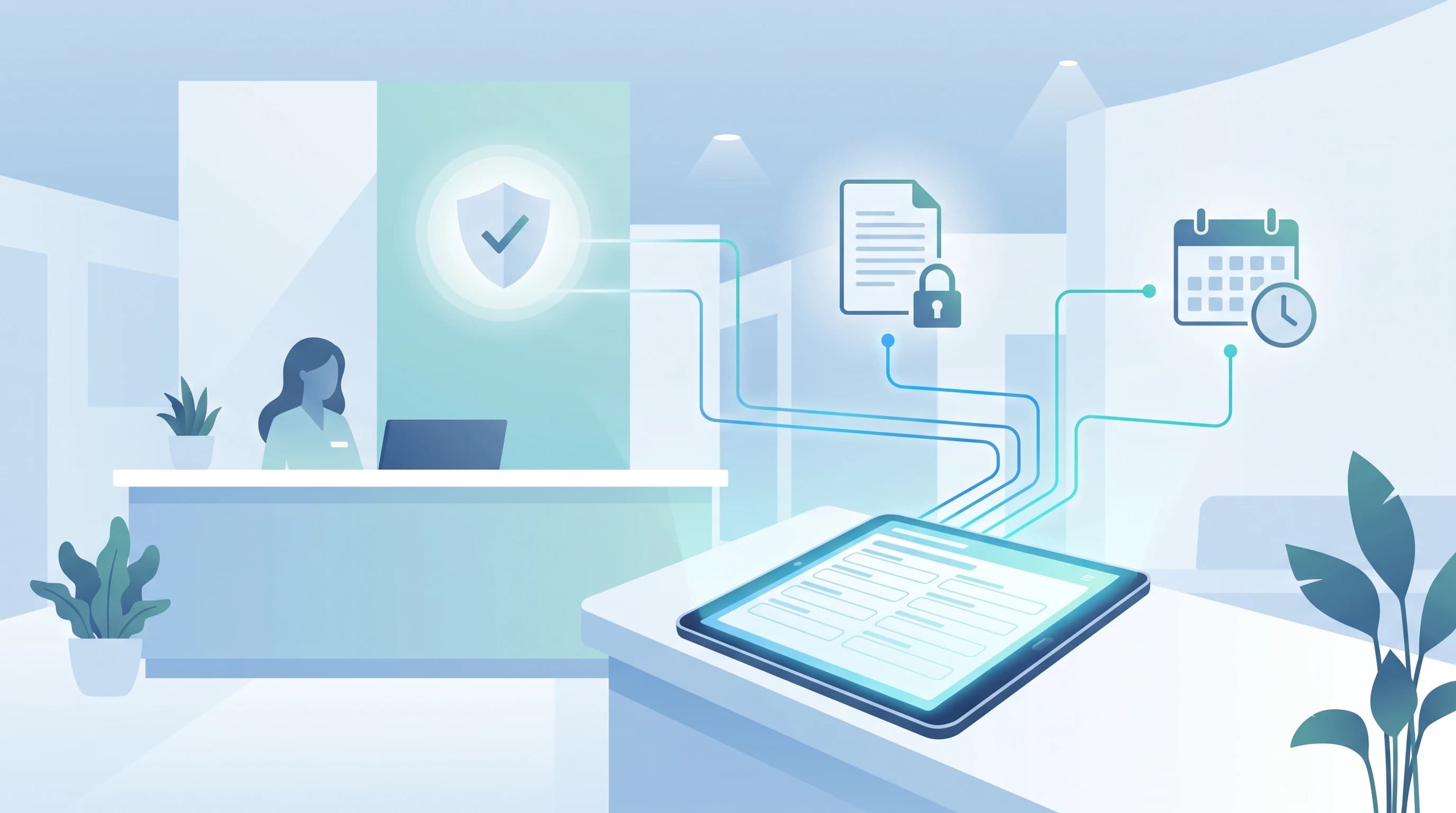
HHS defines a business associate as any vendor that creates, receives, maintains, or transmits protected health information on a covered entity's behalf, and HIPAA generally requires a signed contract, a business associate agreement, with that vendor before the data can pass through it. The rule does not care how briefly the data passes through the vendor's servers. If a workflow step carries a patient identifier, the platform running that step is a business associate, and it needs a BAA on file.
This is where most general-purpose automation platforms fall out of the running. Zapier states directly that it is not HIPAA compliant and will not sign a business associate agreement, which means it cannot be used to automate anything involving protected health information, even though the platform is fine to use for workflows that never touch patient data.
That distinction gets lost in most vendor content, which leans on general security badges like SOC 2 to imply compliance without addressing the BAA question directly. SOC 2 says a vendor's security controls were audited. It says nothing about whether that vendor will sign the contract HIPAA actually requires.
What a compliant build actually looks like
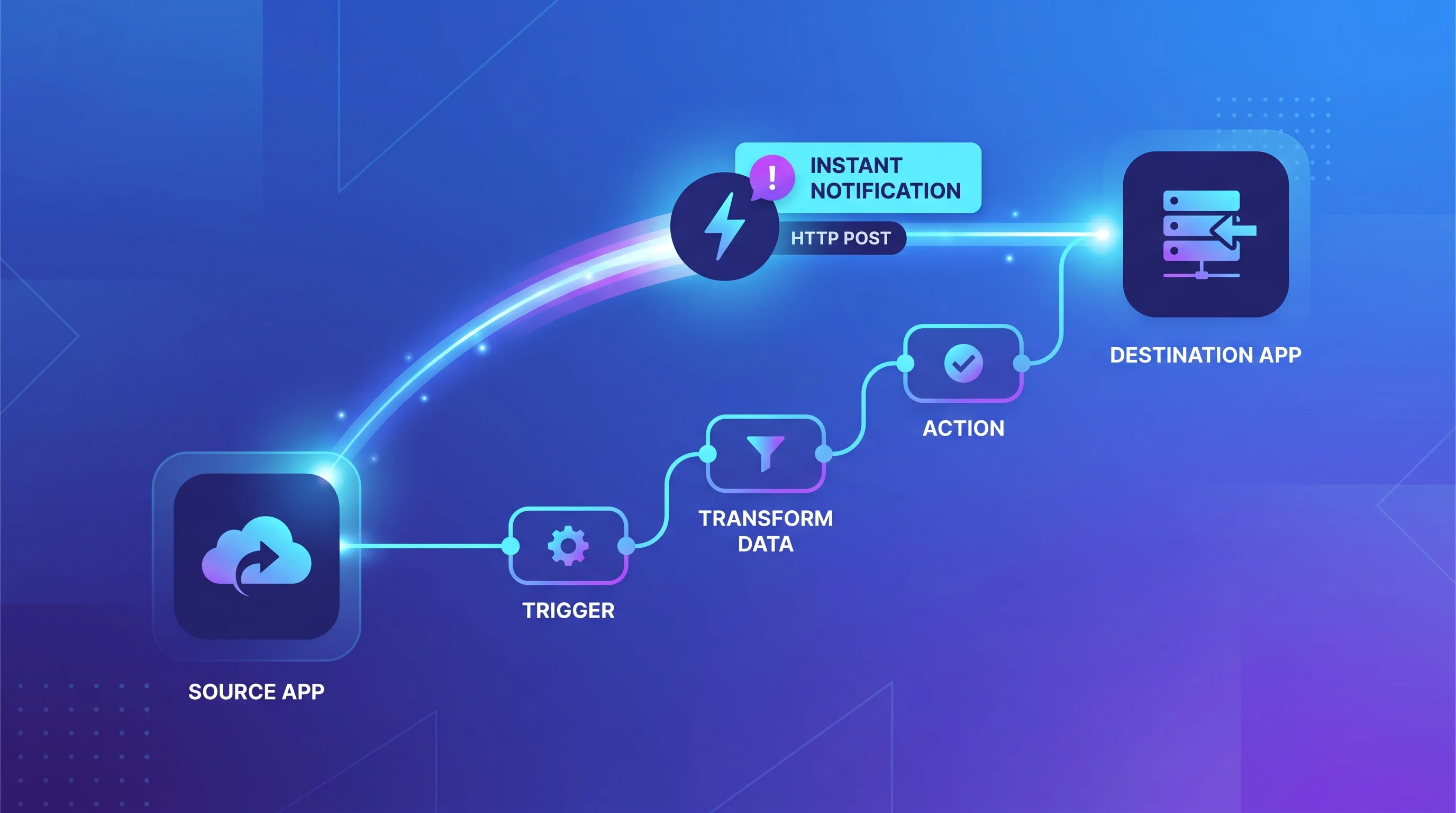
The workable pattern is not "avoid automation platforms in healthcare." It is splitting the workflow by what each step touches.
Steps that never see a patient identifier, an internal Slack alert that a form was submitted, a dashboard counting daily volume, a task assigned to a biller with no patient name attached, can run on ordinary no-code tools without any BAA question at all. Steps that do carry PHI, the intake data itself, the eligibility result, the lab report, need to run through a platform that has signed a BAA and meets the Security Rule's technical safeguards: encryption in transit and at rest, logged access, and a defined retention policy.
Getting that split right, and keeping it right as the workflow changes six months later, is the part a template or a single subscription tool does not solve on its own. It is a build decision, not a shopping decision, and it is exactly the kind of work our workflow automation team handles: wiring the PHI-covered steps through a compliant layer while everything else runs through the faster, cheaper tools that do not need a BAA in the first place.
The cost math nobody publishes
Most healthcare workflow automation guides cite industry-wide savings figures and stop there. The 2025 CAQH Index puts the remaining automation opportunity at $21 billion nationally, on top of the $258 billion already avoided through electronic transactions in 2024, but that number does not tell one practice what its own manual process is costing it.
As an illustrative example: a practice paying two staff members around 25 dollars an hour to spend a combined five hours a week manually keying intake forms and running eligibility checks is spending roughly 6,500 dollars a year on that task alone, before counting the cost of the appointment that gets double-booked because the eligibility check ran late, or the claim that gets denied because a field was mistyped. That is the number worth pulling before evaluating a vendor, not the industry-wide figure that has nothing to do with the practice's actual call volume.
Where phone workflows fit into the same problem
The same BAA requirement applies the moment a workflow moves from forms and records to phone calls. A practice automating after-hours scheduling or intake calls runs into the identical question: does the voice platform sign a BAA, and does it encrypt and control access to the call transcript the same way a compliant data platform would.
We covered that side of the problem in detail in our guide to AI voice agents for healthcare practices, which walks through what the compliance work looks like when the workflow is a phone call instead of a form submission. Our voice AI team builds that layer for practices that want the phone covered the same way the data workflow already needs to be, under one BAA-compliant system instead of two separate vendor conversations.
Key takeaways
- Healthcare workflow automation is only as compliant as the least compliant tool touching PHI anywhere in the chain, not the sum of the vendor logos on the landing page.
- Zapier and Make are fine for non-PHI steps and out of bounds the moment a patient identifier enters the workflow, because neither signs a BAA.
- Split the build: a BAA-covered layer for PHI, ordinary automation tools for everything else, rather than forcing one platform to handle both.
- Calculate the practice's own manual-process cost before shopping for a platform. The industry-wide savings figures are a backdrop, not a budget.
- If the workflow eventually needs to answer or place calls, the same BAA requirement applies to the phone layer, and it is worth building both under one compliant system instead of two.
If your practice is still moving patient data through a form, a spreadsheet, and three separate logins by hand, talk to our workflow automation team about which parts of that process can move to automation today, and which parts need the compliant layer built first.