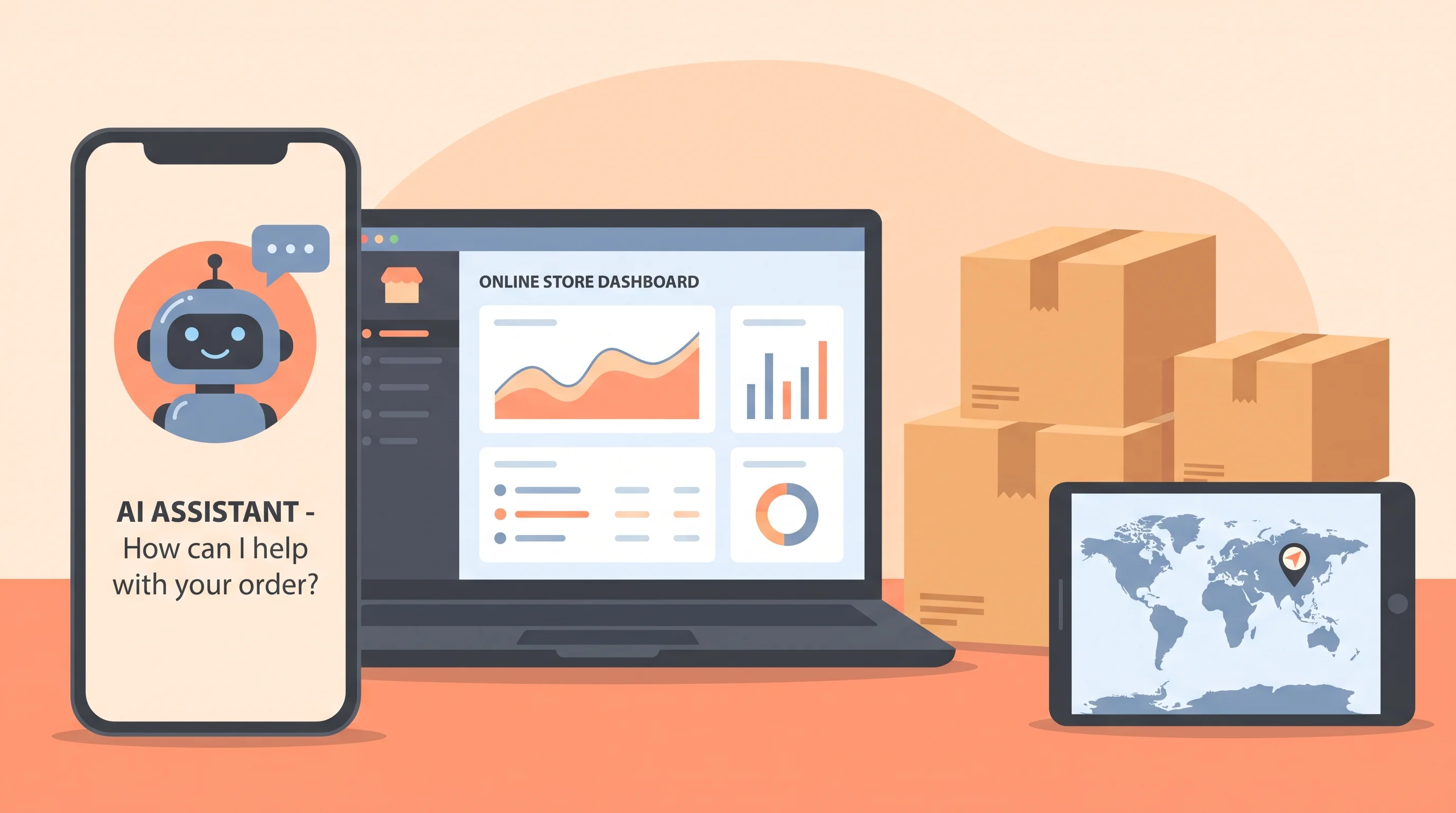
An operations lead at a mid-size e-commerce company just opened her contact center vendor's renewal quote and the seat count went up again, along with the price, for a support line that gets the same fifty questions on repeat: where's my order, how do I return this, is this in stock. She types "ai call center" into the search bar, half expecting another vendor pitch dressed up in AI language instead of an actual answer.
It is a real fix, but "AI call center" describes two genuinely different products, and most of what ranks for the term does not say so directly.
TL;DR:
- "AI call center" means either an enterprise contact-center platform with AI features bolted on (Five9, Talkdesk, Genesys) or an AI-native voice agent stack built for that job specifically (Retell AI, Vapi, Bland). They have different pricing models and different minimum viable sizes.
- Enterprise platforms charge per seat, often with a concurrent-seat minimum, which makes them expensive to run below a certain call volume.
- AI-native voice agent platforms charge per minute of usage with no seat minimum, which fits businesses that get dozens or hundreds of calls a day, not thousands.
- The global call center AI market is projected to grow from 2.98 billion dollars in 2026 to 13.52 billion dollars by 2034, a 20.8 percent annual growth rate, which tells you this is not a passing trend businesses can wait out.
- The businesses that get the most value split the call volume: AI handles the repeatable calls, humans handle the ones that need judgment.
The two things people mean by "AI call center"
Search "ai call center" and you will land on two kinds of pages, often without either one flagging the distinction.
The first is the enterprise contact-center category: Five9, Talkdesk, Genesys, NICE. These are decades-old call center platforms that have layered AI features, transcription, summarization, agent-assist, sentiment scoring, onto a system still built around human agents sitting in seats. Five9's published pricing starts at 119 dollars per seat per month for its Digital tier, but requires a minimum of 50 concurrent seats to get started, which puts the real entry cost at several thousand dollars a month before a single call is handled.
The second is AI-native voice agent infrastructure: Retell AI, Vapi, Bland, and similar platforms. These were built for AI to be the primary thing answering the phone, not a feature added to a human-staffed floor. They charge per minute of call time instead of per seat, and there is no concurrent-agent minimum. Retell AI's pricing runs 7 to 31 cents per minute depending on which language model and voice provider you configure, with pay-as-you-go billing and no contract.
We wrote a deeper platform-by-platform breakdown of the AI-native category in Retell vs Vapi vs Bland if you're already past the "what is this" stage and comparing specific vendors.
How an AI call center actually works
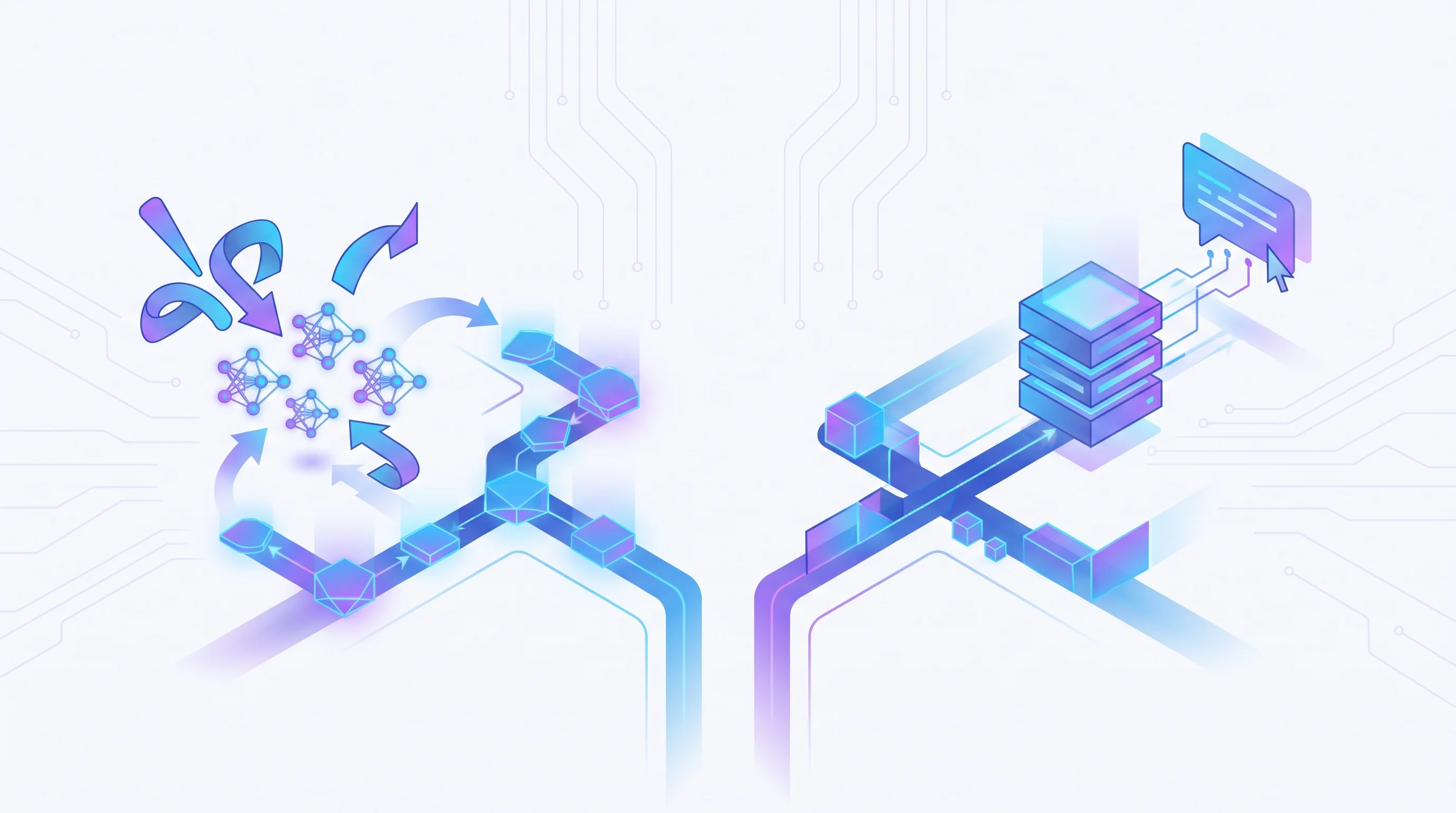
Strip away the marketing and an AI call center runs on the same three-step loop regardless of which category it falls into:
- Understand. Speech-to-text turns the caller's words into text, and a language model figures out intent: booking, billing question, order status, complaint.
- Act. The agent calls out to whatever system holds the answer, a CRM, a scheduling calendar, an order database, and either answers directly or performs the action, like confirming a booking or updating a record.
- Escalate or close. If the call resolves, it ends there. If it needs a person, the AI hands off with a transcript and a summary instead of making the caller repeat themselves.
The part that actually determines whether this works is the "act" step. A voice agent that can talk but cannot see your calendar or write to your CRM is a smarter IVR, not a call center. Our AI automation team builds that connective layer, the integrations that let the agent do something instead of just sounding like it could, which is the difference between a demo and a system that survives contact with real call volume.
What it actually costs to run
Here's the math using a concrete, illustrative example: a business handling 800 inbound calls a month, averaging 4 minutes each, so 3,200 minutes of call time.
| Model | Structure | Illustrative monthly cost |
|---|---|---|
| AI-native voice agent | Per-minute, ~$0.15/min avg | ~$480 |
| Enterprise CCaaS (Five9 Digital, 50-seat min) | Per-seat, $119/seat | ~$5,950 |
| Fully outsourced human agents | Per-agent staffing | Varies widely by market |
The per-minute figure above uses the midpoint of Retell AI's published 7 to 31 cent range as an illustration, not a quote, since your actual rate depends on the model and voice you configure. The Five9 figure is the platform's published starting price applied to its stated 50-seat minimum, which is the real floor even if 800 calls a month would only need a fraction of that.
For a full breakdown of when human-staffed inbound services still make sense next to AI, our guide to inbound call center services covers the split in more detail, including which call types are worth keeping with a person regardless of cost.
When an AI call center is the wrong tool
Not every call belongs to a voice agent, and pretending otherwise is the fastest way to make a good tool look bad.
- Emotionally charged calls. A customer calling angry about a billing error wants to feel heard before they want a resolution. Route these to a human by default.
- Genuinely ambiguous requests. If the reason for the call does not map to a script, a good AI call center design escalates immediately instead of looping the caller through menu options that don't fit.
- Low call volume with high per-call value. If you get 15 calls a month and each one is a five-figure sale, the case for automating the call itself is weak. Automate everything around it instead.
If what you actually need is simpler than a call center, just capturing messages after hours, that's a smaller problem. Our AI answering service guide covers that narrower use case, which costs less and takes less setup than a full AI call center build.
The next step
Before you request a demo from either category of vendor, pull your last 30 days of call logs and sort them into two piles: calls that followed a predictable script (status checks, booking, hours, simple FAQs) and calls that needed a person to think. Industry estimates put the first pile at roughly 60 to 70 percent of inbound volume, but your actual split is the only number that should drive the purchase, not an industry average.
That split tells you which category of AI call center fits: if the routine pile is a few dozen to a few hundred calls a day, an AI-native voice agent platform will almost always beat an enterprise CCaaS contract on cost. If it's in the thousands with complex workforce management needs, the enterprise category earns its price.
Send our voice AI team that 30-day breakdown and we'll map the split for you, which calls the agent should own, which stay with a person, and how it plugs into the systems you already run, before you commit to a platform.