
We have walked into a lot of companies right after a data analytics consulting engagement ended. The pattern is depressingly consistent. There is a beautiful 40-slide deck on someone's desktop. There is a dashboard nobody can refresh because the one person who understood the pipeline was a contractor who left. And there is a finance lead quietly asking why they paid $60,000 for a PDF.
The problem is not that data analytics consulting is a bad idea. It is that most of it is scoped around hours billed instead of assets owned. This post is about the difference, and how to buy the kind that leaves you with something that keeps working after the invoice clears.
If you want the short version of how we structure it, our data analytics consulting engagement model lays out the phases. The rest of this is the reasoning behind it.
TL;DR
- Most data analytics consulting sells hours and slide decks. The value is in what you own when it ends: pipelines, dashboards, and documentation.
- A real engagement has four phases - audit, strategy, build, handover. Firms that skip the audit are decorating numbers nobody trusts.
- Cost ranges from $5,000 for a focused build to $150,000+ for a transformation. The rate matters less than the deliverable.
- Payback is weeks for automated reporting, 3 to 12 months for mid-scope work. If someone promises transformation in 30 days, push back.
- Buy the engagement backward from a recurring decision, not forward from "we have a lot of data."
The two kinds of data analytics consulting
There are really only two products being sold under the same name, and telling them apart before you sign is the whole game.
The first is advisory. Someone senior interviews your team, benchmarks you against peers, and produces recommendations. This has real value when you face a contested strategic question and need an outside perspective nobody internal can give without politics getting in the way.
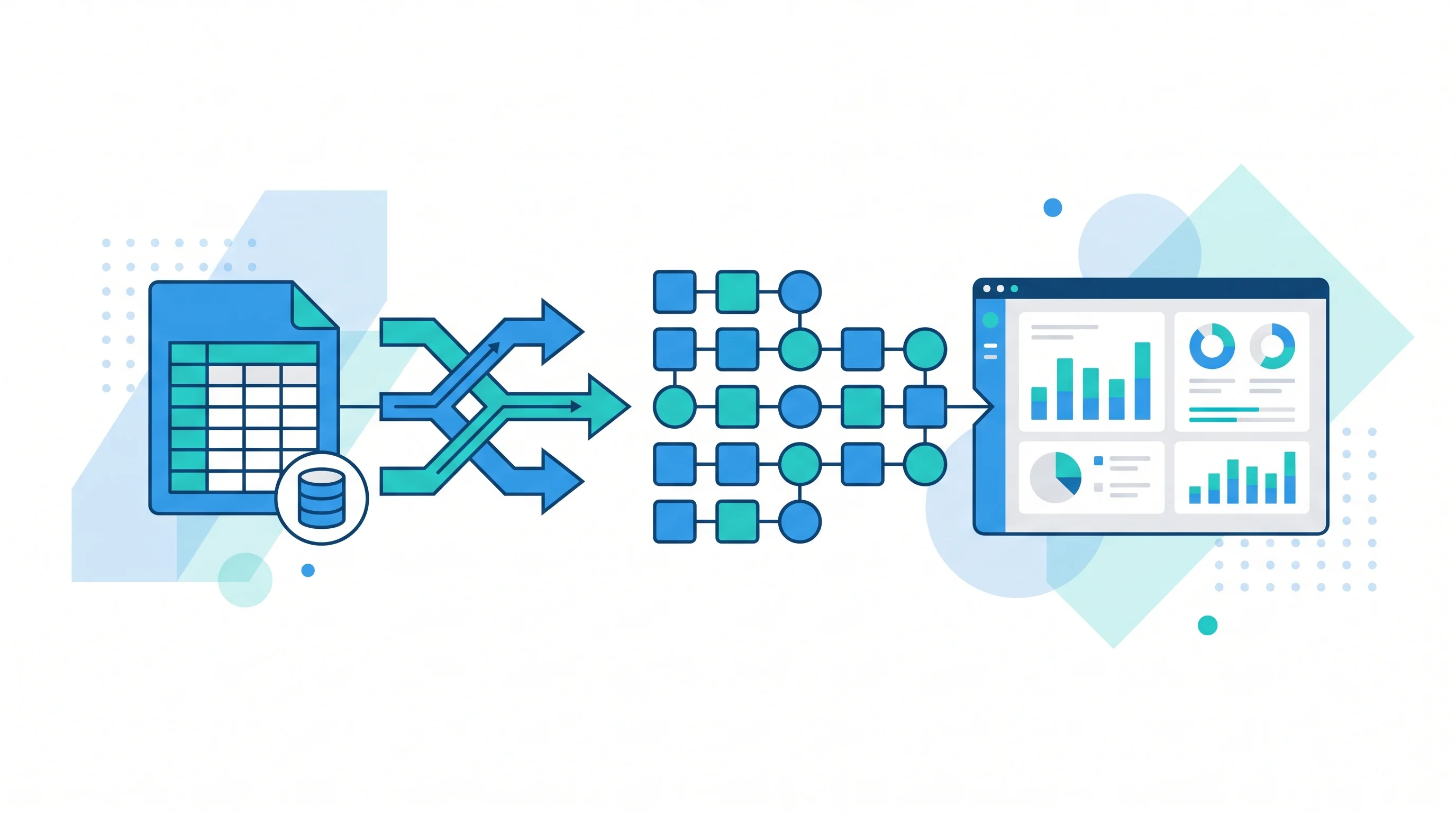
The second is build. Someone connects your systems, cleans the data, models it, and ships dashboards and alerting that run on a schedule. This has value when the deliverable is a decision that repeats.
Most companies asking for data analytics consulting actually want build. They describe it as "we need a strategy" because that is the language consultants trained them to use. When we scope, the first question is always the same: what decision gets faster, and who makes it? If nobody can name it, we are not ready to build anything.
The four phases of an engagement that actually ships
A data analytics consulting engagement that leaves you with owned infrastructure moves through four phases. Skip any one and you get the desktop-deck outcome.
Phase 1: Audit
Before anyone builds a chart, you map where the data lives and how much you can trust it. This is unglamorous and it is where the real money is saved. Most companies discover here that their CRM says 47 closed deals while their finance system says 51, and no dashboard on earth fixes a disagreement about what "closed" means.
The audit output is a plain-language inventory: sources, owners, known quality problems, and the gap between what you want to measure and what you can currently measure honestly.
Phase 2: Strategy
Now you tie metrics to decisions. Not "let's track everything." Instead: the sales lead reviews pipeline every Monday, so build that view; the CFO needs a board pack monthly, so build that one; ops needs an alert when fulfillment slips, so wire that.
Good strategy is subtractive. It kills 80 percent of the metrics people asked for because they do not change a decision anyone actually makes.
Phase 3: Build
This is the part everyone thinks they are buying, and it is genuinely the fastest phase once the first two are done. Pipelines get built, data gets modeled, dashboards get assembled. A solid v1 in a known tool against clean data is days of work, not months. The reason build projects run long is almost never the dashboard. It is that phase one was skipped and the data was a swamp.
Phase 4: Handover
This is the phase that separates data analytics consulting you own from data analytics consulting you rent forever. The consultant documents the pipeline, records how to refresh and extend it, and trains at least one person on your side to own it. If handover is not in the statement of work, you are signing up for a permanent dependency.
What data analytics consulting costs in 2026
Rates and project bands have settled into a predictable range this year. Here is the honest picture.
| Engagement scope | Typical range | What you get |
|---|---|---|
| Focused build | $5,000 - $15,000 | One audit, one pipeline, one dashboard |
| Mid-scope | $15,000 - $50,000 | Strategy, pipelines, dashboards across 2-3 systems |
| Transformation | $50,000 - $150,000+ | Full audit, strategy, build, training, support |
Senior specialists bill $120 to $350 an hour. Global brand-name firms bill multiples of that, and a large share of it funds their overhead rather than your outcome. For most US companies between $10M and $500M in revenue, a boutique that assigns senior people beats a big firm on speed, attention, and cost predictability.
The number that should drive your decision is not the rate. It is the answer to a single question: when this ends, what runs without you paying us again? If the answer is "nothing, you keep the deck," walk.
How to measure ROI before you sign
You can calculate the return on data analytics consulting before a contract exists, and you should. Divide the value of faster or better decisions plus operational savings by the total investment.
The cleanest hard-dollar input is analyst hours recovered. If your team spends 20 hours a month manually assembling reports and automated reporting cuts that to two, that is 18 hours a month back, every month, forever. Price it at their loaded cost and you have a concrete payback line.
Organizations that complete all four phases tend to report strong multi-year returns, but ignore the eye-catching percentages in vendor case studies. Run the analyst-hours math on your own numbers. Most mid-market engagements pay back in 3 to 12 months. If your own math cannot get there, the scope is wrong, not the concept.
The mistakes that waste the budget
A few patterns show up over and over when data analytics consulting goes sideways.
- Buying strategy when you needed a system. You end up with recommendations you have to implement yourself, and they expire.
- Skipping the audit. Beautiful dashboards on untrusted numbers get abandoned the first time they disagree with the CRM everyone already believes.
- No handover clause. The pipeline becomes a black box the day the contractor leaves.
- Enterprise-shaped scope at SMB scale. A small business does not need a transformation. It needs one clean pipeline and one dashboard, scoped tight and shipped.
- No named decision. If nobody can say which recurring decision gets faster, the whole engagement has no target to hit.
The teams that get real value treat consulting the way they would treat hiring a contractor to build an extension on their house. They want blueprints, permits, and a building they own at the end - not a consultant who moves in.
How we structure it at Buildberg
We build data analytics consulting backward from a recurring decision and forward to a system you own. The audit comes first, always. Strategy is subtractive. The build ships pipelines before pretty visuals. And handover is written into the scope, because a system you cannot maintain is a liability, not an asset.
Because most analytics problems are really data-plumbing problems, our workflow automation builds often run alongside the analytics work - connecting the systems and cleaning the event taxonomy that make the numbers trustworthy in the first place. And where the reporting or alerting benefits from a model in the loop, our AI automation service wires that in without turning your stack into a science project.
If you want to see the shape of the output before you talk to anyone, read our playbook on building a data dashboard your team actually opens, our head-to-head on Looker Studio vs Power BI, and our rundown of Google Analytics alternatives for when GA4 is not enough.
The one question to ask every firm
Before you sign any data analytics consulting proposal, ask: "When this engagement ends, name every asset I own and who on my team can maintain it."
A firm selling you a system will answer immediately and specifically - the pipeline, the dashboards, the documentation, the trained owner. A firm selling you hours will get vague and start talking about ongoing partnership.
The vague answer is the whole reason companies keep paying for the same insight twice. Buy the system. Own the pipeline. Keep the value after the invoice clears.
Ready to scope an engagement that leaves you owning the result? Start with our data analytics consulting service and bring the recurring decision you want to get faster.