Here is the advice you will find in almost every "how to start a white label AI agency" guide: pick a platform, pay the monthly fee, slap your logo on it, and you have a business. That advice is not wrong, exactly. It is just describing the version of this model that stops working the fastest.
A white label AI agency is not one business model. It is two, and most guides only walk you through the weaker one. The first is a software rental: you license a chatbot or voice AI platform, remove its branding, and resell access to it. The second is a build partnership: you sell a client an outcome, and a fulfillment team builds the specific thing that outcome requires. Both get called "white label AI." Only one of them survives a client who gets curious enough to search for the tool behind your product.
TL;DR:
- A white label AI agency either resells access to a shared platform, or resells delivery of a custom-built system. These are different businesses with different margins.
- Platform licensing is fast to start and fast to commoditize, because the client's competitor can license the exact same tool.
- Build-partner delivery costs more per project but is much harder for a client to walk away from or replicate.
- Demand for the category is real. Gartner expects 40 percent of enterprise applications to feature task-specific AI agents by the end of 2026, up from less than 5 percent in 2025.
- The decision that actually determines profitability is which of the two models you build the agency on, not which platform you pick.
The two things people mean by "white label AI agency"
Model one: rent the platform, rebrand the interface
This is the version most listicles describe. A vendor builds a chatbot, voice agent, or automation tool. You pay a monthly license, remove their name from the interface, put your own on it, and sell access to clients at a markup.
Chatbase, one of the more visible white label AI chatbot platforms, prices its own branding removal as a $99-a-month add-on on top of its Standard and Pro tiers, with full white-label controls bundled into its custom Enterprise plan. That is the entire mechanic of this model in one pricing page: you are not paying for a custom product, you are paying to hide whose product it is.
The appeal is real. You can be "in the AI business" within a week, with no engineering hires and a predictable monthly cost. The problem shows up later. The platform has a public pricing page. Nothing stops a client, or your competitor, from finding it and signing up directly once they know the category exists. You are selling access to something that is, by design, easy to go around.
Model two: sell the outcome, a partner builds the system
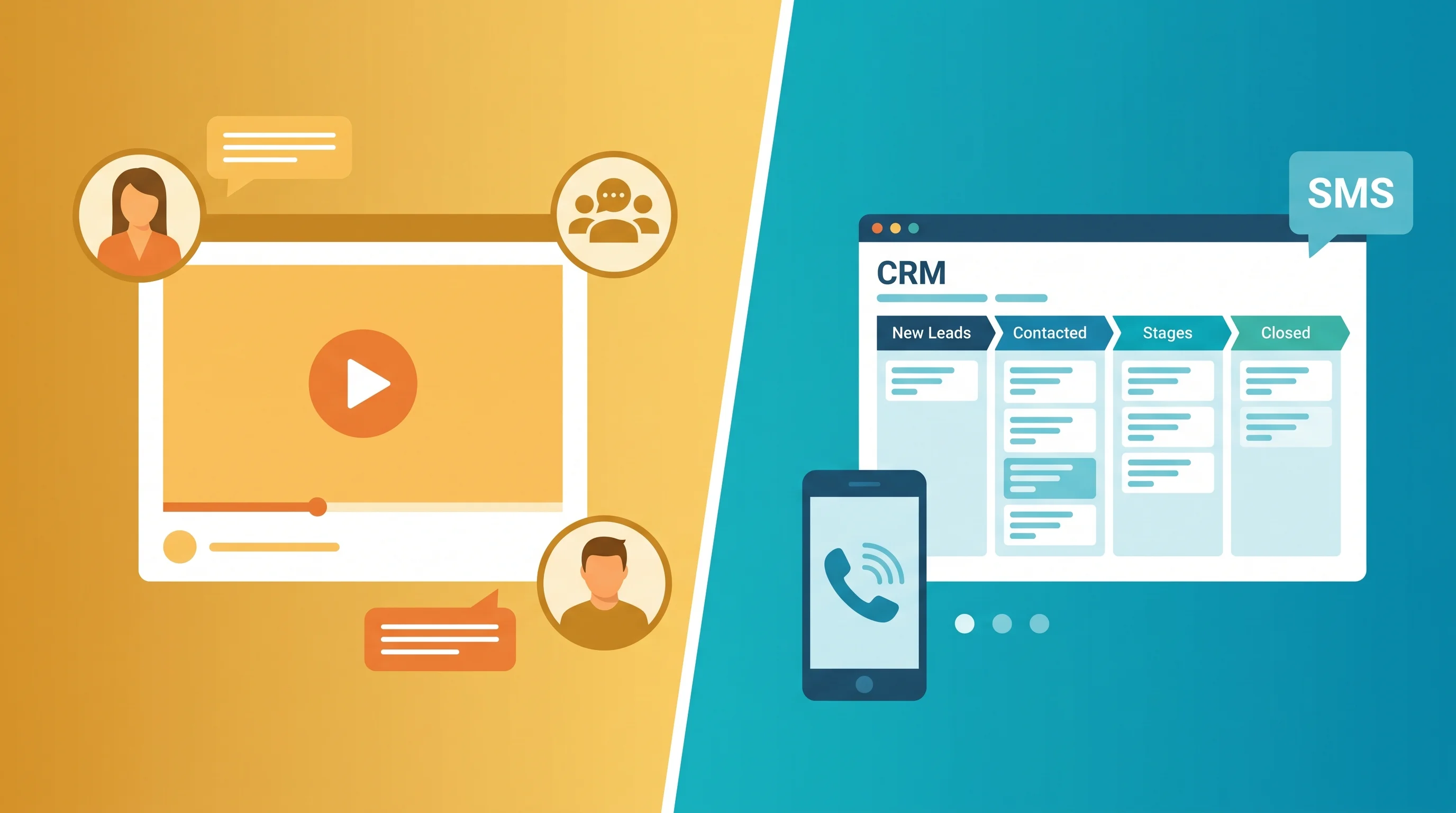
The second model looks different from the client's side and completely different from yours. The client asks for a result, like an AI agent that answers inbound calls and books appointments into their specific calendar system. You scope it, price it, and a build partner delivers a system tailored to that client's stack, data, and workflow. There is no shared login page a competitor can discover. There is no generic product to unsubscribe from, because the thing that was built does not exist anywhere else.
This is the structure behind our own white label AI and automation services for agencies: agencies bring the client relationship and the brand, we build the AI agents, automations, and dashboards behind the scenes, and the agency delivers the finished product under its own name. It is a wholesale-build relationship, not a software license, which is the detail most "start a white label AI agency" guides skip because it is a harder story to sell in a five-minute pitch than "$99 a month."
Why the rental model compresses so fast
Three things happen to platform-rental white label AI agencies on a predictable timeline.
- Pricing gets discovered. Most white label AI platforms publish their pricing openly, because that is how they sell to agencies in the first place. The same page that convinced you to sign up is one search away from convincing your client to skip you.
- The tool gets commoditized. AI chatbot and voice platforms compete hard on the same feature list. When ten agencies can offer the same underlying product, the only lever left is price, and price wars are not a business plan.
- Support becomes your whole job. The vendor owns the roadmap and the infrastructure. You own every support ticket, every "why did the bot say that" call, and every outage explanation, for a product you did not build and cannot fix.
None of this means the rental model is worthless. It is a reasonable way to test demand for an AI offering cheaply before committing to anything heavier. The mistake is building an entire agency's positioning on a layer this thin and calling it defensible.
What margin actually looks like in each model
As an illustrative example, say a platform license costs an agency 300 dollars a month and the agency resells access to five clients at 400 dollars each, for 2,000 dollars in revenue and roughly 1,700 dollars in gross margin before support time. That margin looks attractive until a client's staff member finds the same platform's public pricing page and asks why they are paying a markup for nothing extra.
Now take the build-partner model. A client pays 6,000 dollars, as an illustrative example again, for a custom AI voice agent wired into their specific booking system. The agency pays a wholesale build cost to its fulfillment partner and keeps the rest. There is no public sign-up page underneath that number for the client to find, because what they bought does not exist as a product anyone else can subscribe to. The margin is lower as a percentage in some cases, but it survives the client getting curious, which the rental model's margin does not.
The real decision is not "what markup can I charge." It is "what happens to my margin the day the client learns what is running underneath their product." One model has an answer. The other does not.
What to actually resell under a white label AI agency
Most successful white label AI agencies pick two or three categories rather than trying to cover the entire AI landscape:
- AI chatbots and customer service agents that handle inbound questions across chat and email.
- AI voice agents that answer calls, qualify leads, and book appointments, which pairs naturally with our voice AI services for agencies whose clients still lose revenue to missed calls.
- Workflow and back-office automation that removes manual data entry between a client's existing tools, the layer covered in our guide to running an AI automation agency.
- AI-powered analytics and reporting that turns raw activity data into a dashboard a client's owner actually checks.
- Custom integrations connecting a client's CRM, calendar, and support tools so the AI layer has real data to act on, rather than sitting on top of disconnected systems.
Picking a narrow lane and being genuinely good at delivering it beats offering all five badly. A client can tell the difference between an agency that built something for them and an agency that resold them a subscription.
How to evaluate a white label AI partner before you sign anything
Beyond that one question, check three things: how fast they turn around a scoped project (our own white label build turnaround runs 1 to 3 weeks per project, as a reference point), whether documentation and support stay white-labeled all the way through delivery, and whether pricing is per-project or a flat monthly fee regardless of what gets delivered. A partner who cannot answer the first question specifically is telling you they have not thought about it either.
When a white label AI agency is the wrong move entirely
If you do not yet have clients asking for AI features, do not build the agency structure first. Validate demand with one project through a build partner, priced per engagement, before committing to a platform license, a support queue, or a sales pitch built around a category you have not sold yet. The white label partnership model works when you already have the client relationship and are missing the delivery capability, not when you are trying to manufacture demand that does not exist.
Which white label AI agency are you actually running
Go back to the test from earlier: could your client find and buy the thing you resold them without you? If yes, you are renting a storefront on top of somebody else's product, and your margin has an expiration date. If no, because what you sold was built for that specific client, you are running a business a competitor cannot just go sign up for.
Most agencies do not choose deliberately. They start on the rental model because it is fast, keep growing on it because it is easy, and only feel the ceiling once a client's own staff finds the platform underneath their product. Choosing the build model on purpose, before that call happens, is the entire difference between a white label AI agency that lasts a year and one that compounds.
When you are ready to move a client off a rented tool and onto something built specifically for them, our white label AI and automation team builds the AI agents, workflows, and dashboards behind your brand, so your clients only ever see you.