What is email marketing automation, and why does mine barely make money?
If you typed some version of that into Google, you are asking the right question, because the honest answer is not the one the roundups give you. Almost every guide answers "what is it" with a feature tour and then hands you a list of the same eight tools. That is not why your setup underperforms. It underperforms because what you built is a newsletter wearing an automation costume, and the flows that actually print revenue were never set up at all.
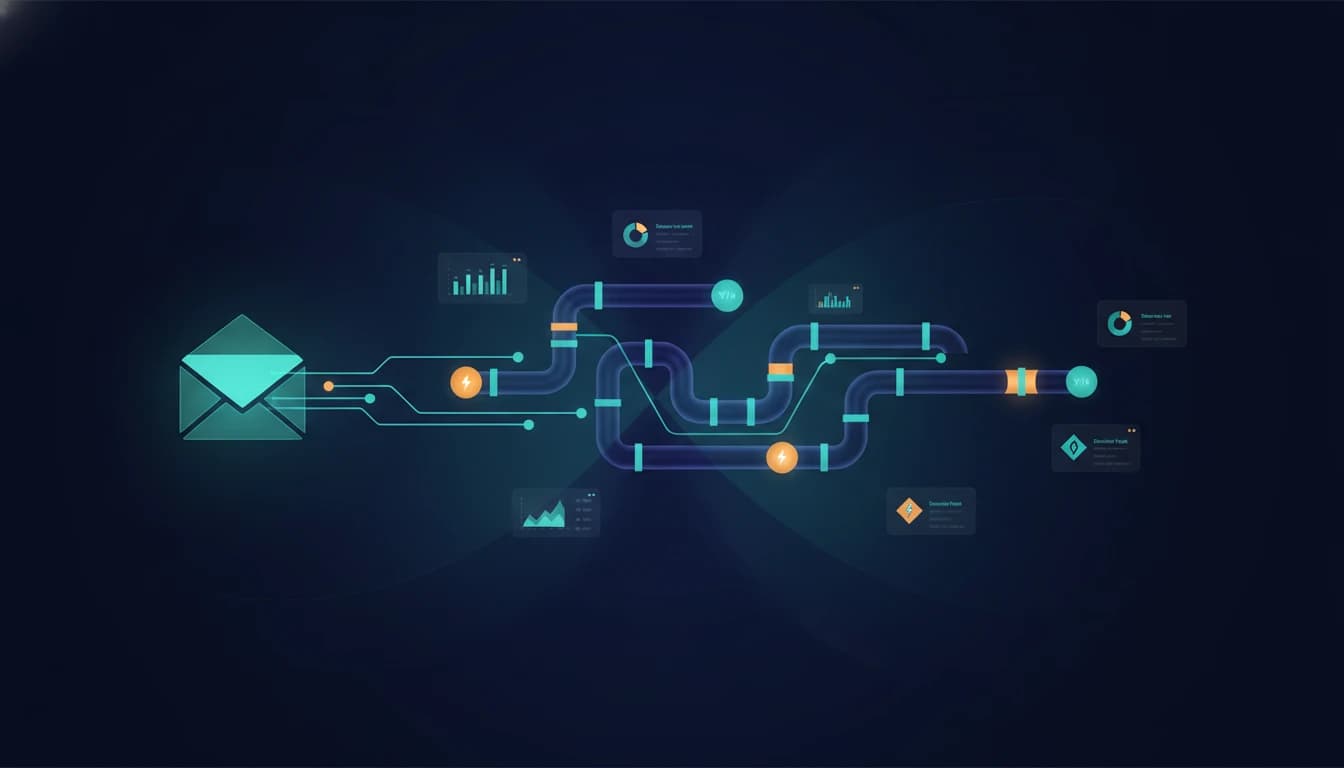
Email marketing automation is email that sends itself. A trigger fires - someone joins your list, abandons a cart, books a call, goes quiet for 60 days - and a rule decides which message they get and when. No one hits send. Done right, it is the single highest-return channel most businesses own. Done the common way, it is a weekly blast with the word "automated" attached. Getting from the second thing to the first is a data and workflow problem, which is exactly the kind of build our GoHighLevel automation team sets up, so this guide is about that layer rather than another feature grid.
TL;DR:
- Email marketing automation means triggered, personalized email, not a scheduled broadcast to your whole list.
- Automated flows drive a wildly outsized share of revenue relative to how few emails they represent.
- Most setups underperform because the high-revenue triggered flows were never built, and because the automation is not wired to real customer data.
- The tool is the easy part. The triggers, segmentation, and CRM plumbing behind the emails are what separate a money-maker from a decoration.
- Build the four or five flows tied to real intent first, then worry about campaigns.
The number that should reframe how you think about this
Here is the stat that reorders the priorities. In Omnisend's analysis of ecommerce brands, automated emails made up roughly 2 percent of all sends but generated around 30 percent of email-driven revenue. Each automated send earned about $2.87 versus $0.18 for a scheduled campaign - so automated email earned in the neighborhood of 16 times more per send than the broadcast kind.
Read that again. Two percent of the volume, roughly a third of the revenue. The emails you send by hand to your whole list are the ones you spend the most time on, and they are the least productive per send you have. The emails that make the money are the ones you set up once and mostly forget.
That is why email overall posts the returns it does. Litmus pegs the average at $36 back for every $1 spent, higher than any other channel. But that average is carried by triggered flows tied to behavior. A newsletter-only program does not earn $36 to $1. The automation is where the leverage lives.
Why your setup barely makes money
If your email marketing automation is underperforming, it is almost always one of these three failures, and none of them is the tool.
1. You built broadcasts and called it automation
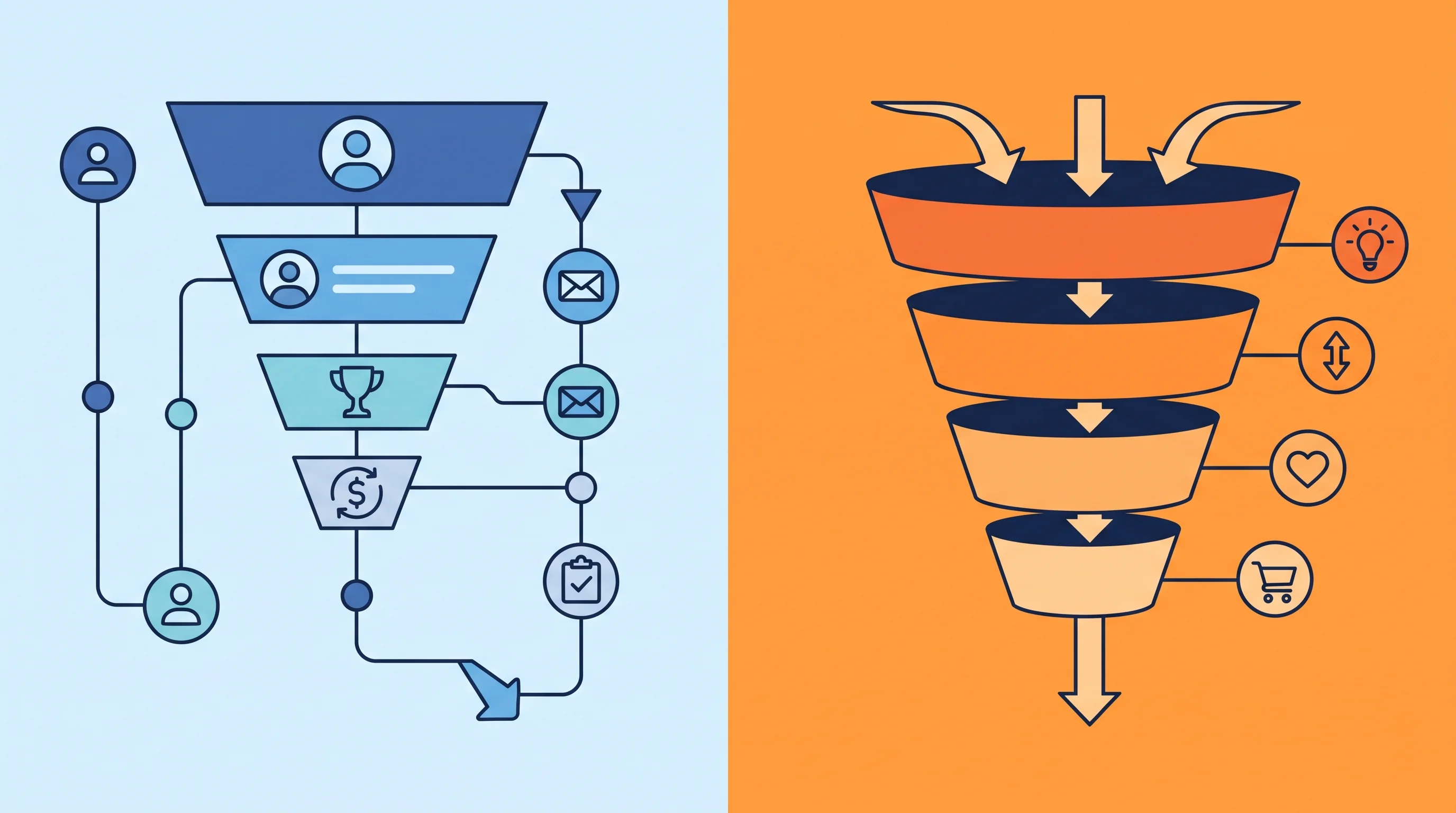
A scheduled newsletter is not automation in the sense that matters. It goes to everyone, says the same thing, and ignores what any individual actually did. The revenue lives in the flows that react to a person: the welcome that greets a fresh subscriber while their interest is hot, the follow-up that catches an abandoned cart or an abandoned booking form, the post-purchase series that turns one sale into two. Most businesses have the newsletter and none of the flows.
2. The automation is not wired to your data
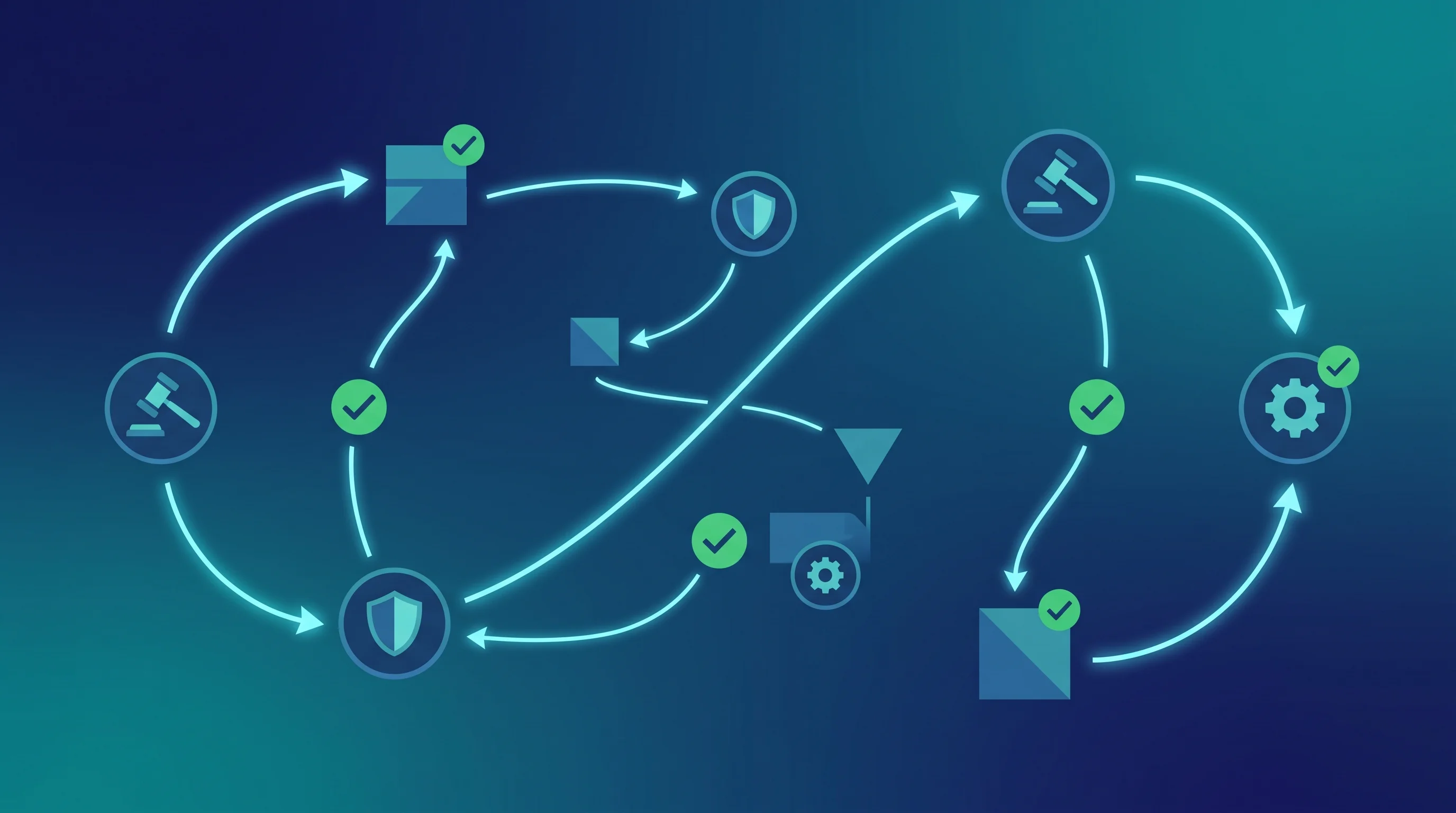
A trigger can only fire on an event the system can see. If your purchases live in one platform, your bookings in another, and your email in a third, and none of them talk, your "automation" is blind. It cannot send an abandoned-cart email because it does not know a cart was abandoned. This is the quiet killer, and it is a plumbing problem, not an email problem. It is the same integration work our workflow automation service handles when events in one system need to drive actions in another.
3. Everyone gets the same message
Personalization is not a first name in the subject line. It is sending the person who just bought a different email from the person who has not opened anything in three months. Without segmentation driven by real behavior and CRM fields, you are broadcasting again, just with more steps.
The flows that actually make the money
You do not need 40 automations. You need a handful, built well, tied to genuine moments of intent. In order of how quickly they usually pay off:
- Welcome / onboarding sequence. Fires the moment someone subscribes, buys, or signs up. Interest is never higher than right now. Set expectations, deliver quick value, and make the next step obvious.
- Abandoned cart or abandoned form. Fires when someone starts and does not finish - a checkout, a booking, a quote request. These recover revenue that was already halfway to you.
- Post-purchase or post-booking. Fires after the conversion. Confirms, reduces buyer's remorse, drives the review, and sets up the repeat purchase or upsell.
- Re-engagement / win-back. Fires when a contact goes quiet for a set window. Either you wake them up or you clean them off your list, and both outcomes help you.
- Lead nurture. Fires when a lead is interested but not ready. Drips relevant proof over time until they are. This is where email marketing automation earns its keep for longer sales cycles, and it pairs naturally with the systems in our guide to AI lead generation.
Notice what these have in common. Every one is triggered by a specific behavior, and every one needs your email platform to know that the behavior happened. That knowledge is a data-integration job. The copywriting is the easy 20 percent.
The AI layer in 2026 (kept honest)
AI is genuinely useful here in 2026, but not as the magic wand the ads suggest. Where it earns its place:
- Predictive send timing - shipping each contact's email when they personally tend to open, instead of one blast time for everyone.
- Behavioral triggers on messy signals - deciding a contact is "at risk" from a pattern of declining opens and site visits, not just a single hard event.
- Content and subject-line variation - generating and testing variants faster than a human can write them.
None of that rescues a program with no flows and no data. AI on top of a wired, well-segmented system is a multiplier. AI on top of a newsletter is a faster newsletter. Build the plumbing first, then let AI optimize what is flowing through it.
How to actually choose and build
Skip the tool comparison for a minute. The tool question is close to solved: most modern CRMs and all-in-one marketing platforms include capable automation, so the platform is rarely what holds you back. Ask these instead, in order:
- What are my real triggers? List the behaviors worth reacting to - purchases, bookings, no-shows, form fills, inactivity, renewals. This is your flow list.
- Can my system see them? For each trigger, confirm the event actually reaches your email platform. Wherever the answer is no, that gap is your first project.
- What are my segments? Define the audiences whose messages should differ. New vs returning, engaged vs cold, customer vs prospect.
- Who owns it when it breaks? An automation that misfires silently is worse than no automation. Name an owner before you launch, not after a broken flow emails 4,000 people the wrong thing.
Only after those four does the specific platform matter, and by then you will find your existing CRM probably already does the job. If email and CRM are separate systems that do not sync, consolidating onto one platform that does both - the model behind GoHighLevel - usually beats bolting a standalone email tool onto the side. It also plays well with your other outreach, like the SMS marketing flows that often run in the same sequence.
Key takeaways
- Email marketing automation is triggered, personalized email - not a scheduled broadcast. If everyone on your list gets the same thing on the same day, you have a newsletter, not automation.
- The revenue is wildly concentrated in a few triggered flows. In ecommerce data, automations were about 2 percent of sends and roughly 30 percent of revenue. Build the welcome, abandonment, post-purchase, re-engagement, and nurture flows before anything clever.
- Underperformance is almost never the tool. It is missing flows, unwired data, and one-size-fits-all sends. Fix those three and almost any capable platform will do.
- Your CRM probably already does this. The bottleneck is usually whether your events and pipeline data reach it, not which email product you picked.
- AI is a multiplier, not a rescue. It optimizes a system that already has flows and data. It does nothing for a newsletter.
If your email marketing automation is a weekly send that never quite pays off, the fix is not a new tool - it is wiring your customer data to the handful of flows that react to real behavior. That build, connecting your CRM, your events, and your sequences into one system that sends itself, is exactly what our GoHighLevel automation team sets up, and it fits into the broader workflow automation stack that keeps every trigger fed with clean data.