
Every roundup of the best CRM for agencies opens the same way: a ranked table of platforms scored on features, integrations, and price. Pick the one with the highest score, the logic goes, and you have your answer.
That advice is backwards, and following it is how agencies end up migrating CRMs twice in three years.
Here is the contrarian version, and it is the one that actually holds up. For an agency, the CRM with the best features is almost never the right CRM. The feature list is the part that barely differs between serious platforms. What differs, and what decides whether the tool survives contact with your client roster, is a single architectural question that most guides never ask: can this system run many clients out of one place without turning into a mess?
Settle that question and the shortlist writes itself. Skip it, and the best-reviewed CRM on the market becomes the one you rip out next year.
The one way an agency is not a normal business
A normal business buys a CRM to manage its own customers. One pipeline, one team, one set of contacts. Every mainstream CRM is designed for exactly that, which is why they all demo beautifully.
An agency does something those tools were never shaped around. It runs many businesses at once. Each client needs its own contacts, its own pipeline, its own automations, and its own reporting, walled off from every other client. Your account manager for a dental group should never see the plumbing company's leads by accident.
That is not a feature you bolt on. It is an architecture you either have or you do not.
This is the layer generic CRM roundups skip, because they are written for the single-company buyer. When you evaluate a CRM for agencies against that single question - how well does it hold many clients in one system - the field splits cleanly into two groups, and most of the "top 15" lists collapse to a handful of real options.
The real decision axis: single-tenant vs multi-tenant
Every CRM an agency considers falls into one of two camps.
Single-tenant CRMs are built for one organization. HubSpot, Salesforce, Pipedrive, and Zoho all live here. They are powerful, mature, and deep. To serve multiple clients, you either buy a separate account per client or cram everyone into one account with tags and permissions holding the walls up. Both approaches get expensive or fragile fast.
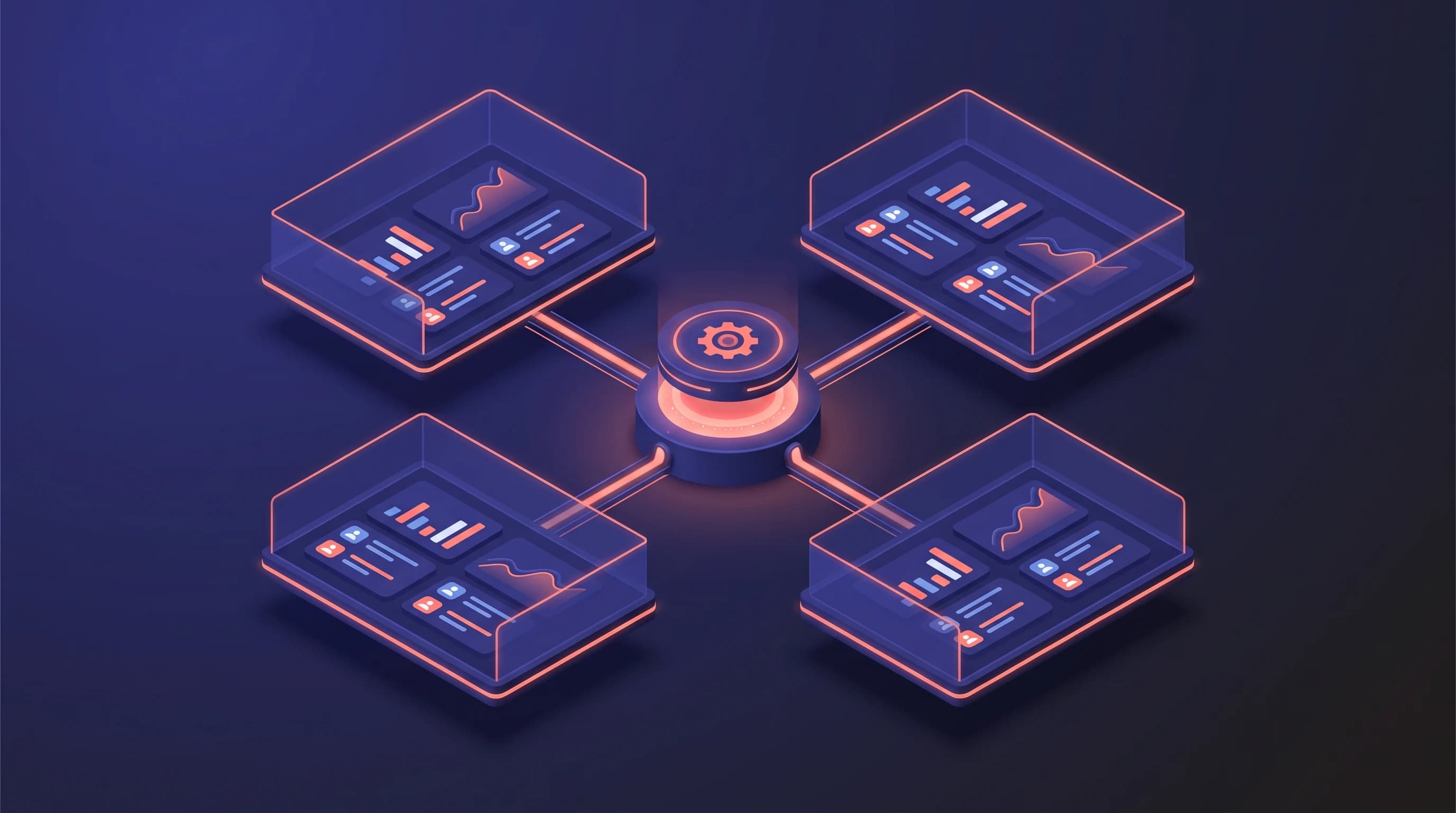
Multi-tenant CRMs are built so one agency account spawns unlimited client sub-accounts, each isolated by default. GoHighLevel is the clearest example. The sub-account is the unit the whole platform is organized around, which is exactly the shape an agency needs.
The pricing models follow the architecture, and this is where the cost math flips.
HubSpot's free tier covers up to 1,000 contacts and 2 users, then charges per seat as you grow. That is fine for one company. For an agency adding a client team every month, per-seat pricing means your CRM bill climbs with your roster whether or not those clients are profitable yet.
GoHighLevel prices the opposite way. Its Starter plan is $97 per month for 3 sub-accounts, and the Unlimited plan is $297 per month for unlimited sub-accounts and unlimited users. Add your fourth client or your fortieth and the platform cost does not move. For an agency, flat-per-platform beats per-seat the moment you have more than a few clients.
The white-label question you have to settle early
There is a second question single-company roundups ignore entirely: whose brand does the client see when they log in?
For a lot of agencies, the answer matters. Handing a client a login to "YourAgency CRM" instead of a third-party vendor's product changes the relationship. The software becomes part of what they are paying you for, not a tool you are reselling.
That is only possible if the CRM supports white labeling - rebranding the login, the domain, and often the mobile app. Most mainstream CRMs do not allow it. GoHighLevel does, which is a large part of why it dominates the agency market.
If rebranding is on your roadmap, it belongs in the decision now, not after you have onboarded twenty clients onto a platform you cannot rebrand. We wrote a full breakdown of the tradeoffs in our guide to white label CRM, and the reselling economics sit alongside our broader white label work. The short version: settling this late is one of the most expensive mistakes an agency makes with its CRM.
The angle everyone misses: your CRM is a retention tool
Here is what almost no "best CRM for agencies" article talks about, and it is the part that actually protects your revenue.
Agencies do not usually lose clients because the work was bad. They lose them in the first few weeks, before the work has even had time to be judged, because of a broken handoff.
Picture the pattern. Your sales conversation goes well. The client explains their goals, their history, the three things that went wrong with the last agency. They sign. Then delivery takes over and asks them to explain it all again, because none of that context made it into the record the delivery team works from.
The client just watched the agency forget everything they said. Confidence drops in week one, and quiet churn starts before the first deliverable ships.
A CRM only fixes this if it is structured so the handoff is automatic. The context captured during the sale has to live in the same client record the delivery team opens, with the right fields, notes, and next steps already populated. That is a configuration and automation problem, not a feature-list problem, which is why buying the "most powerful" CRM does nothing to solve it on its own.
This is the difference between a CRM that stores your clients and one that keeps them. An operational CRM that automates the workflow, rather than just filing the contact, is what turns the handoff from a weak point into a strength.
So which CRM should an agency actually pick?
Run the decision in this order, not the order the roundups use.
- Start with architecture. Do you need many isolated client workspaces from one account? If yes, you are looking at multi-tenant platforms, and GoHighLevel is the default. If you are effectively one company, single-tenant CRMs stay in play.
- Then check the branding question. If clients will log in and you want your brand on the screen, you need white-label support, which narrows the field sharply.
- Then match the pricing model to your growth. Per-client billing pairs with flat platform pricing. Internal-only use can live with per-seat.
- Only then compare features. Inside your shortlist of two or three, now the feature grid finally means something, because every option already fits how an agency actually works.
If your shortlist comes down to the two names most agencies weigh, we put them head to head in GoHighLevel vs HubSpot, and the different types of systems people mean by "CRM" are broken down in our guide to CRM examples.
Key takeaways
- The standard advice - rank a CRM for agencies by features - is the wrong axis. Serious platforms barely differ on features.
- The decision that actually matters is architecture: can one account run many isolated clients cleanly? That splits the field into single-tenant (HubSpot, Salesforce, Zoho) and multi-tenant (GoHighLevel).
- Pricing follows architecture. Per-seat cost climbs with every client; flat multi-tenant pricing does not. Match the model to how you bill.
- Settle white labeling early. If clients will log in, your brand on the screen is a decision, not an afterthought.
- Your CRM is a retention tool. Most early churn comes from a broken sales-to-delivery handoff, and the right CRM is the one you can wire so that context travels automatically.
Get the architecture and the handoff right and the CRM stops being a place your client data goes to sit. It becomes the system that keeps clients past the fragile first weeks and scales with your roster instead of fighting it. If you would rather not stand that up yourself, building and automating the agency CRM layer - sub-accounts, white-label setup, and handoff automation included - is exactly the work our GoHighLevel automation team does. Send us the client you almost lost in month one, and we will show you where the handoff leaked.